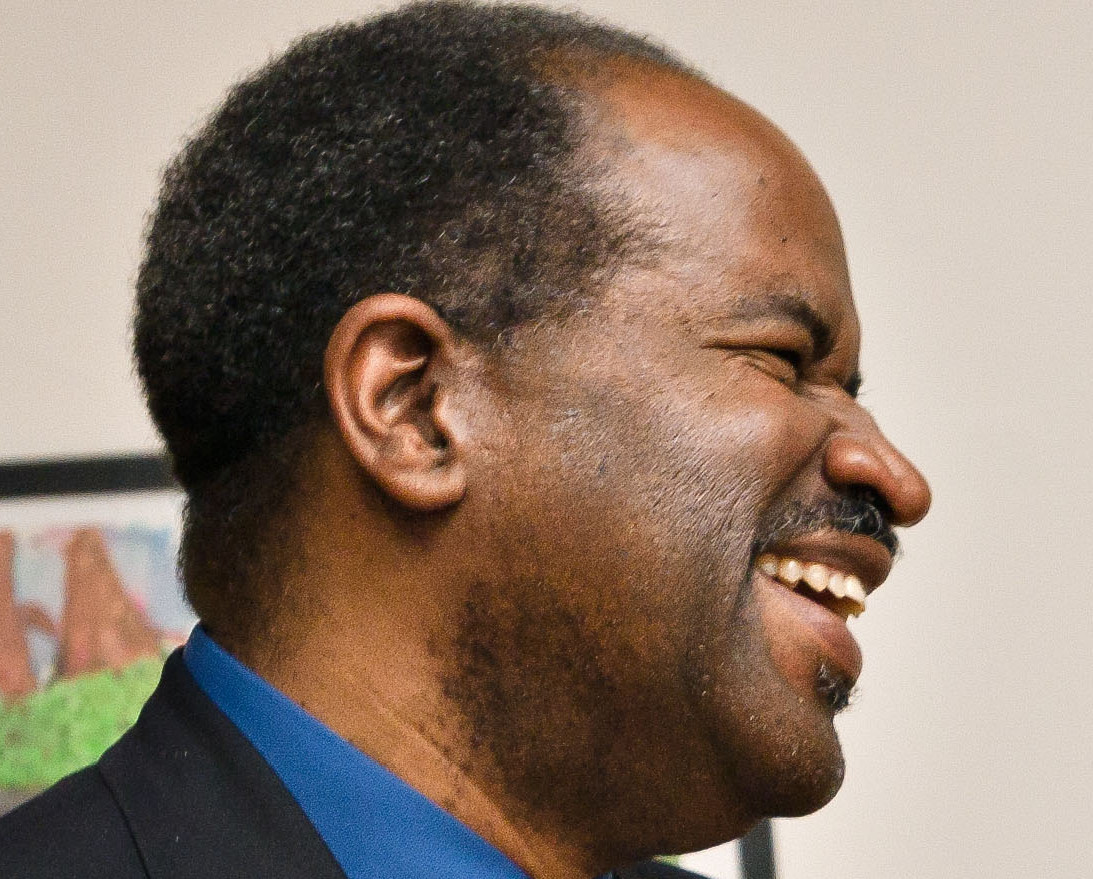
“That's just the score I have; it’s different, and I think everyone's is.”
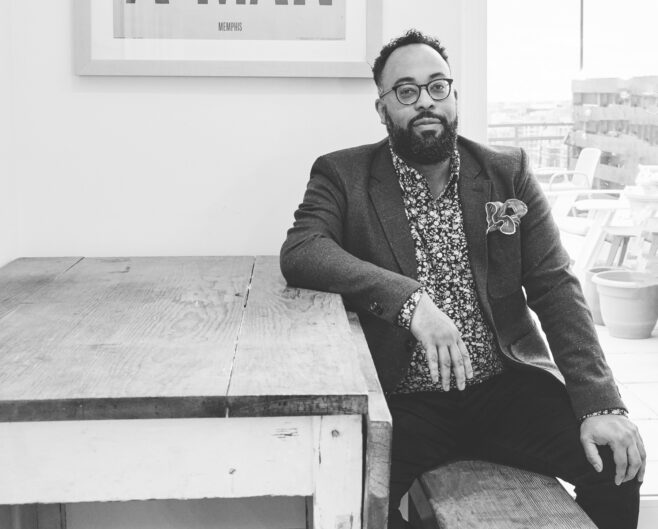
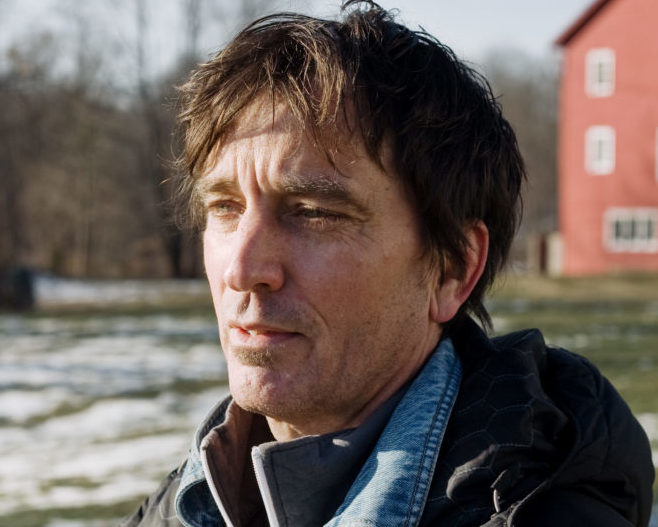
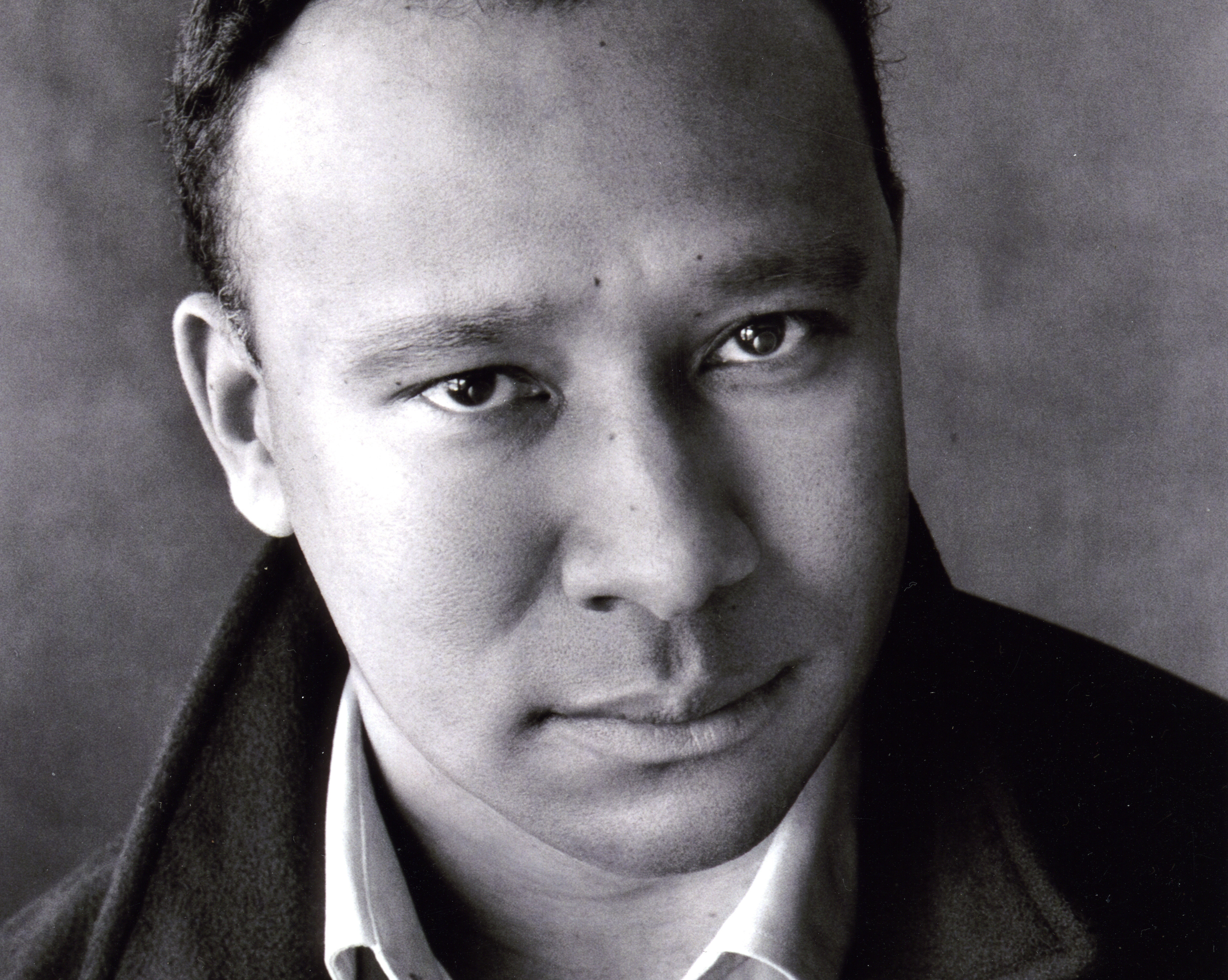
KEVIN YOUNG
Interviewed By: Anthony Borruso
So many of my favorite poems of yours are odes: “Ode to the Midwest,” “Ode to Chicken,” “Aunties,” just to name a few. Like Neruda’s “Ode to My Socks,” they often celebrate daily comforts and mundane joys, uplifting them, declaring their importance and worthiness of language. In “Ode to Chicken,” this includes cheering on poultry’s quiet workmanship, how it “doesn’t put on airs—pigs graduate / to pork, bread / becomes toast, even beef / was once just bull / before it got them degrees—/ but, even dead, / you keep your name / & head.” Then again, sometimes these odes go to darker places, like in “Aunties” where you declare, “Aunts cook like there’s no tomorrow / & they’re right,” and “Ode to Gumbo” which, among its praise for the dish, drops the devastating realization: “I know none, / even this, that will / bring a father / back to his son.” What is it, you think, that draws you to the ode form, and are there any particular poets who have shown you how to navigate it?
That’s a great question. For me, the ode’s a really dynamic form. When I was starting to write a book that was revisiting Louisiana, which is where my family’s from, my father died. I couldn’t write for a time.... And then I started writing those odes, the food odes, especially the ode to chicken and pork and greens, and it was a way of talking about pleasure, but it was all bound up in elegy, too. It was a really strange thing. While the poems are ostensibly about this one thing, they’re also clearly infused with the loss of my dad, and the more they go along, I think, the more explicit it is. The pleasure was being able to talk about this food that we had shared, but also these things that often are seen as kind of lowly. To me, that’s where poetry lives and can do its best work, when it praises the everyday. To realize in the everyday are these extraordinary things, and, you know, that’s what we have in the end. Those pleasures, those small things. My dad loved food, and he loved cooking it, he loved sharing it, he loved the whole culture of it.
Yeah, you definitely get a sense of food being more than "just food" to him.
A lot of the things that he liked, now they have words for them, like “farm-raised” or “locally sourced.” He always used to joke. He said, “We didn’t call it ‘soul food,’ we just called it ‘food.’” That quality, which I think includes the humor, is very much in there. And an ode, in its modern form, requires that kind of humor, or at least honesty, which I think sometimes leads to humor. The poets I admire who do that so well are people like Yusef Komunyakaa, Lucille Clifton, and her wonderful “homage to my hips,” and her other homages. Yusef has a poem, “Ode to the Maggot,” that I teach regularly.
I was just thinking about that one. That’s, like, as small as you can get!
Yeah, exactly. And, you know, poems like that really rocked my world.
Is Yusef a big influence on you? I think you worked at the University of Indiana at some point, right?
Indiana University. They’ll be very upset if you call it the “University of Indiana.”
Indiana University, sorry. No, yeah, I went to Butler for a little while, so I know that’s a big mistake!
Oh, well, IU he had left, actually, by the time I got there, which was a shame; we didn’t overlap, but I knew him. Certainly, he was a huge influence on me and other members of the Dark Room Collective, which is where I first encountered him.
Nice! And, as you said, so many of your odes, and many other poems of yours, are centered around food and family recipes; they show the love, pleasure, hope, grief, and assortment of other feelings that are served up at dinner table and cookout alike. This fascination with food has carried into your editorial efforts as well, with an anthology you curated in 2012 called The Hungry Ear: Poems of Food and Drink. Aside from the many beautiful poems it houses on the preparation, symbolic resonance, and communal power of food, it’s also deftly structured, including one section for each season and many poems that are grouped together by culinary subject–there are dairy poems, soup poems, meditations on blackberries, beans, and seafood. Did editing this collection give you any insights into how you treat food in your poetry?
I had written many food poems before I did the food book. And so, in a way, it was an after-the-fact recognition of the influences that were there. But I also think it was its own project. Before that, I had done an anthology of elegies called the Art of Losing: Poems of Grief and Healing, which, similarly, I had worked on after writing a lot of elegies myself. It was really healing, actually, because it’s a book I wish I had when my father died, and I’ve been fortunate enough to have people come up to me and express its importance to them. They still do that from time to time when I give a reading. But the food book, too, was a way of talking about many of the same things. In my family, there’s a tradition called the "repast," the meal after the funeral, which is very important. It’s a moment of taking care of the living. That kind of mix was really part of the book.
I wanted to structure it seasonally, and so it starts and ends with blackberries. Many of the poets had written about blackberries, and so, I figured, “Here they are!”
Poets love their blackberries.
Yeah, of course. I had some just a little bit ago in the living room! I think they’re also a signal of change. And they're this delight that you used to pick yourself, you know?
Yeah.
I think there’s a sense of the seasons, a sense of everydayness, and also the way that poetry is like food. It’s something that sustains us that we often take for granted.
I guess, too, I wanted to go from speaking about food to the way that your poems, in their very form, savor language. Usually, you employ short lines, brief stanzas, and heavy enjambment, which compels the reader to slow down and ruminate on each word. It’s sonic texture, its multiple meanings, its interplay with the sentence’s syntax. As with the best cooks, one can taste the intention you put into every word choice and line break.
In your newest collection, Night Watch, for instance, a few lines into the second section, in a long poem entitled “All Souls,” you write, “The Sun / knows nothing. // Only Night– // My voice raised in it / tall as wheat.” I like how, in just three lines, you move from what could be a bright image of the sun to a denigration of it as a symbol and a refocusing on “night.” There’s also the brilliant reorientation of “my voice” in the next two lines, as the word “raised” suggests its volume until that additional description of “tall as wheat” gives it height and spatial dimension. One can also feel the presence of silence bearing down on language here, how the truncated lines give words like “Sun” and “night” space to breathe, and the reader room to interact with them. Can you talk a bit about what ultimately led you to this short-line poetic form that we see so much of in your work? And why do you think it pairs well with the subjects that you tend to confront?
I mean, I wish one had a choice in these things.
Haha, yeah.
You know, it’s just how I ended up hearing language. I don’t even often think of it as short. I had a teacher, Denise Levertov, when I was studying at Stanford on the Stegner, who, if you read your poem in workshop and didn’t read the line breaks, she would yell at you to stop. She would be like, “What are you doing?” And then she’d say, “The page is a score!” She’d say that over and over. And that really got drilled into me. In the end, I thought it was so generous of her to remind you that what you put down actually matters, and that it translates. As she would say, the reader is a conductor of this orchestra you’ve written, and you have to give them cues of how to play it, how to hear it, how to read it, and keep it in their body. That’s just the score I have; it’s different, and I think everyone’s is. And, you know, my score is influenced by the talk of Louisiana, the blues and jazz I heard, but I’m sure also by our moment and the music around us, whether it’s TV, or in this book, a mix of spirituals and other sacred music, but also a lot of that kind of loss and silence you mentioned.
Right. It’s interesting that you mentioned that you don’t even notice, really, the length, how it’s just kind of a natural rhythm that you fall into.
Yeah.
It makes me think, too, how a lot of people now write their poems or collect lines in phone notes. Do you ever sketch out some lines on your phone, or is it mostly on the page?
I love notes, I confess. I mean, it’s right there, usually. I’m also a student of Lucille Clifton’s in the sense that I had always admired her and got to know her. She has shortish poems; she has shortish lines. She worked on a thing called a VideoWriter, which is, like, an in-between word processor/computer. I definitely think that there’s an idea of that inherent in her form.
Yeah, and she was the person who selected your first manuscript.
Yeah.
And that was a manuscript that you wrote mostly during your undergraduate. What did it feel like when someone like Lucille Clifton selects you for a major prize?
It was an incredible feeling. I knew and admired her work. I didn’t know her personally then. I think I was 22 at the time, and I had written this book mostly in college. I was writing about Louisiana and my family, and then also these poems that were about what it meant to be awake and alive in those moments, which seem both long ago, but also seem similar to now, somehow. And in those poems, I was really thinking about the American landscape. The collection was called Most Way Home, so there’s this idea of home and also of displacement, basically, the archetypal African American story. To have her choose the manuscript, someone who I think understood those stories all too well, was really incredible and surprising, and pleasing. It was part of the National Poetry Series, and then it came out, actually, 30 years ago this year.
Oh, wow, so it’s the anniversary. That’s wonderful!
Maybe we could talk a bit more about the new collection. So this one opens up with “Cormorant,” which I thought was a really great way to get into it. Not only does it establish the elegiac voice that will inhabit a lot of its poems, but it’s also a compelling meditation on the power of naming. I like how it continually rebrands this bird, calling it an “inelegant pelican,” a “burnt // goose, orphaned stork,” a “Besmirched / crow-cousin.” Though many of these names are derisive and belittling, one can sense some admiration and kinship that the speaker feels for this bird as well, with his unkempt crown, and watching him dry his waxless wings. I live in Tampa Bay, and recently went to a nature preserve where I saw a similar bird called an anhinga that also has those waxless wings, allowing it to dive deep for its prey with less pushback. As in your poem, I saw it fanning them out to dry. I like how you played up the idea that these wings are a useful hunting tool, but also a potential vulnerability. What made this bird feel like an appropriate starting place for you?
The Cormorant's such a fascinating bird, and an actual figure in Louisiana, something you see there all the time, that you don't necessarily see everywhere else. And, thinking about praise, you don't eat Cormorant, so you don't honor them in that way. They’re just a part of that landscape, and there are other, worse names that they get called in the poem. I think that playfulness was part of it, but part of it is also just, you would see them driving when you’re heading to what we call home in Louisiana. You’re passing over bayous, or driving near them, and you’d see them with their arms raised. I think I call it an “unpraised crucifix,” or a “crucifix unpraised.” There’s that kind of eerie sublimity that I think they provide. It felt very much like driving with my dad, who would see different things in that landscape and would see the past. My previous book was called Stones, and in many ways, it’s in the same form and tone as those poems in Stones. Then again, it seemed always slightly different than those poems. It seemed to inaugurate a new thing, if only because my father is so vivid and alive in “Cormorant.” And so, I want to kind of praise this bird, but also praise him and his memory.
It’s heartbreaking, but also beautiful, how the end of that poem lets the father in a little bit. You get that sense of the speaker hoping to feel the presence of their father through the bird.
Yeah.
It ends with the lines, “...you’ll do– if only / I could see you again, hungry, / waiting, at the edge of the bayou.” I really liked how there’s an internal rhyme there of “do” and “bayou,” but it’s also broken up. It’s not a perfect couplet, which reminded me of one of my favorite poems, “Feeling Fucked Up” by Etheridge Knight. At the end of his poem, he rhymes “thing” and “sing” as an end rhyme, but he has a line in between them that feels like it's disrupting the expected couplet. Can you talk a little bit about the way this poem came to its close, and I guess just your general strategy with finding a good ending for a poem?
If one can write a poem like Etheridge Knight, then one is fortunate, but, you know, the couplet’s always lurking when you’re writing any lyric poem. Shakespeare is there, right? And you might think of his sonnets…. But I also think there’s this sonic quality that sometimes signals an ending, a perfect one, and sometimes I want to do that, but often it’s just how it sounds and how it feels.
In that poem, it’s a “bayou,” but also this “you” that comprises the bird, my dad, Louisiana, the past, all these places that one inhabits and inherits, and tries to understand.
I also think it’s great that the uplifted wings are so pivotal in that poem, because that’s an image that is carried throughout the collection. In the second poem of your Dante series, when you’re responding to Robert Rauschenberg’s illustrations, you have the image of someone raising their hands. You say something like, as if asking not to shoot or to fly. And I feel like the cormorant’s a good embodiment of that. It’s this bird that can obviously fly, but it’s also a deep diver. It’s kind of lowly in a way.
Yeah. Yeah, absolutely.
As I went further into the collection, I started thinking about Keats a lot, and how pervasive he is. Most obviously in the first part of the “Werewolf Hills” section, called “The Stair,” which meditates on visiting Keats’ final living quarters by the Spanish Steps, and seeing his death mask. But also your "Two-headed Nightingale" sequence and the presence of many dark woods and nocturnal images that evoke the “forest dim” in Keats’ Nightingale poem. As you reckoned with death, loss, and the possibility of resurrection, did you come to view Keats in a new light?
Well, I love Keats. I think a lot of our romantic impulses come from him and our notions of reading and what the sublime can mean, and that it can mean both terror and beauty. For me, that quality is so embodied in that death mask, which is a regular thing people would do, especially if you were seen as important to record. But now it seems a bit foreign to us. I was just struck by it sort of sitting there, and as I say in the poem, “look at it, not look at us.” We’re regarding his death mask, which is a literal moment of his not looking at us. That kind of feeling goes throughout, the idea of looking and seeing. I was interested in Hardy and some of these other figures who think about "The Darkling Thrush." The series itself is called “Darkling,” which is such an interesting word. It feels like it’s a person, like a henchman or a hireling or something, but it actually just means “darkening,” and so there’s that as well as Dante and the title of the book being Night Watch, and what night means.
I actually visited the Keats-Shelley Memorial House two years ago on my honeymoon, which was the only time I ever got to do that, but it really struck me how indescript it was next to the Spanish Steps. I think there was maybe one sign above it, and it looked so ordinary. In your poem, it almost feels like Whitman’s “Crossing Brooklyn Ferry” in a way, where you’re speaking back to Keats while experiencing things from his window, trying to see from his historical vantage point. At the same time, there’s an anticipation of the future, and other writers who might come to this room and be affected by it in some way.
Sure.
I especially like that line describing the teenagers who are “tired / of what they don’t / know yet.” Like, they felt very lost, but maybe in the future, they’ll find their way to poetry, or something to care about.
Right. Yeah, I mean, it’s a powerful place, and you just think of Keats and how he both knows and doesn’t know he’s dying. This is one of the last things he saw, and it’s so well preserved. You really get a sense of his life there, and his death.
For sure. I also want to talk about the Berryman poem. It’s called “St. Mary’s,” and it describes his final losing bout with alcoholism and self-doubt. Yet still, there’s this note of hope in the poem in how he will be remembered by “The living thing / of his writing he nurses / like a wound.” How do you think you managed to write about such tragic subjects without succumbing to melodrama or cynicism? Is there a way you think about balancing the light and darker aspects of your poetry?
I think you just have to be honest, and you have to actually be curious about the subjects, especially someone else’s life. In a short poem, you can hope to honor someone, but you also have to hope to find balance and some aspect of connection. That was important for me. Berryman’s someone I’ve written about before. I edited his selected poems for the Library of America, and I’ve been connected to him in many ways. Some days I find his Dream Songs, which are beautiful and so important to me and to others, but also they’re written in the 60s and have this blackface in them. And so, how do you kind of reckon with that?
Yeah.
But really, I was also fascinated by how he would have these stints in recovery, and then get better. He’s constantly striving in his writing and his life. I still think of the poem delicately. It was one of the poems that I was still working on and thinking about even when I got to the page proofs.
Recently, I was thinking about Berryman and Amiri Baraka, two poets who you’ve described as big influences. And they both strike me as similar in terms of how they write about fragmented personalities, fragmented identities.
Mm-hmm.
Berryman has this personality where it feels as if part of himself is always sabotaging or undermining another part, whereas Baraka feels like he’s more directly confrontational, or that he even despises a part of himself. I’m thinking of a poem like “An Agony. As Now.,” which begins, “I am inside someone / who hates me.” Do you think there’s a similarity there in terms of the disintegration of identity, or the way these writers deal with fragmentation?
It’s a great question, and I think that would be a great essay to think through. I’m interested in both of them, and Baraka, I even got to read with a couple of times. They are writing around the same time, and one could argue they were writing in really different directions, but they are both concerned with identity and race. I think a poet I would also throw in there is someone like Michael S. Harper, who was at Brown when I was there. I didn’t study with him because he wasn’t teaching grad students anymore, but I did work for him a couple of summers. And he has this amazing poem that’s called “Tongue-Tied in Black and White” where he reflects on Berryman and his use of blackface. He says, “your ear lied,” at one point. But he’s also trying to understand Berryman and why he uses it.
You wrote an essay for the Kenyon Review entitled “Responsible Delight Re-Evaluation of John Berryman,” and in it, you talk about a student of yours who is struggling to write a polyvocal poem about the complexities of love. You prescribed reading some Berryman for him, as this might guide him in trying to incorporate a few different voices.
Right.
I really like this idea of a creative writing teacher being like a doctor and writing up a script for some poetic medicine (hopefully in better handwriting). Can you tell me about some other writers that you’ve prescribed for students in the past when you were teaching? And what lyrical malady do you think it might have cured for them?
Well, let me see if I can give you one or two. Theodore Roethke is not read as much as he should be. Roethke is much more complicated than the anthology poems you often get. He’s a poet who is writing quite early about what it means to have your mind fight itself, and the effects of mental illness.
Yeah.
He wasn’t trying to write about it, but he was trying to write sort of as it, and trying to embody or enact it. I think that’s very powerful. He was a huge influence on some of those poems by Plath that people treasure, and so he’s someone you should study to think about how you can do that. His section poems are so wild and interesting, and show you why his contemporaries thought of him as one of the greats. And so I like to prescribe him sometimes. I just recently was teaching at a workshop called Macondo. It’s a wonderful workshop that is held in San Antonio. One of the things that came up was his notebooks. He has a great set of notebooks called Straw for the Fire that was posthumously edited.
Oh, I didn’t know that.
They’re amazing! One wishes you had his notebooks, you would be like, “These are great poems!” Roethke’s someone who deserves further study, and I was happy when I was going through the archive to do A Century of Poetry in The New Yorker that I came across two of his early poems from the 40s. I think one is from an asylum. It was really important to get a sense of how the New Yorker was publishing work that was “confessional,” even in the 40s.
I would be remiss if I didn’t ask something about “Two-Headed Nightingale.” It’s one of the longer pieces in this new collection and takes on an epic scope in how it narrates the lives of Millie and Christine McKoy, two conjoined twins that were connected at the base of the spine, who were born into slavery but went on to become entertainers who would perform song and dance throughout the world. I had actually read about these sisters before. My undergraduate teacher and outstanding poet in his own right, Tyehimba Jess, has a series of poems in Olio where he relates their history through these beautifully intricate syncopated sonnets that use an interlocking form to embody their singular and collective experience. While your piece is less formally entwined, I was taken by its slippery use of pronouns; the speaker of the poem sometimes shifts between singular and plural mid-sentence to embody a blended consciousness. It begins, “We was born / blue / conjoined / but breathing–” besides the girls’ shared consciousness, the wording here (and in other places in the poem) sounds like AAVE and hints that the twins are part of a larger collective of Black folks who have struggled and persisted in the American South. Could you talk about where their story might intersect with a broader Black experience?
Yeah, I’ve always been fascinated by them or her, because she referred to herself often as singular.
Yeah.
And I think of this idea of singular in the broadest sense. I really wanted to explore this consciousness that she had and insisted upon which could be both plural and singular. That, of course, does seem like a metaphor for a broader sense of community and selfhood. I ended up calling this pronoun usage “the royal I.”
I love that. That’s a great term!
She had this self that was bigger than the self, but also hints of royalty and regalness. The poem also thinks about the ways that she’s living through a time when the country is divided, a civil war, but also, of course, the country can feel divided now. What does it mean to be double at this time when division is so central? I wrote those poems a while back, and they seem to chime with the other poems in the collection and to become this chorus of voices. These influences, these voices, she was able to embody these close harmonies by all accounts. And so I love her thinking through and her singing through her experience and through herself.
Interview Posted: January 6, 2026


MORE FROM DIVEDAPPER. (Drag left)