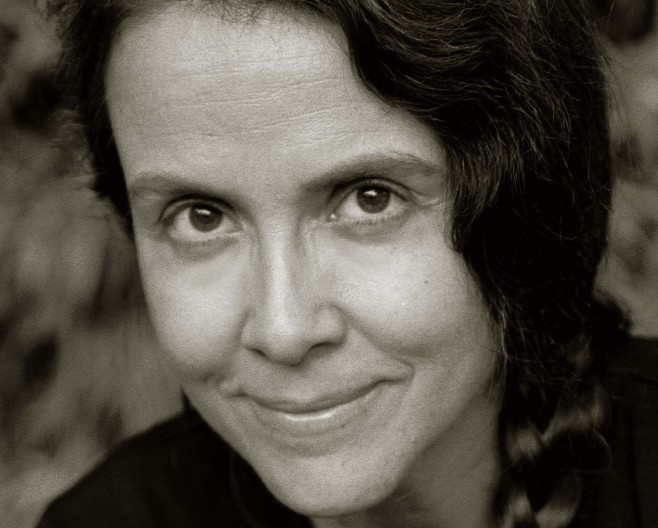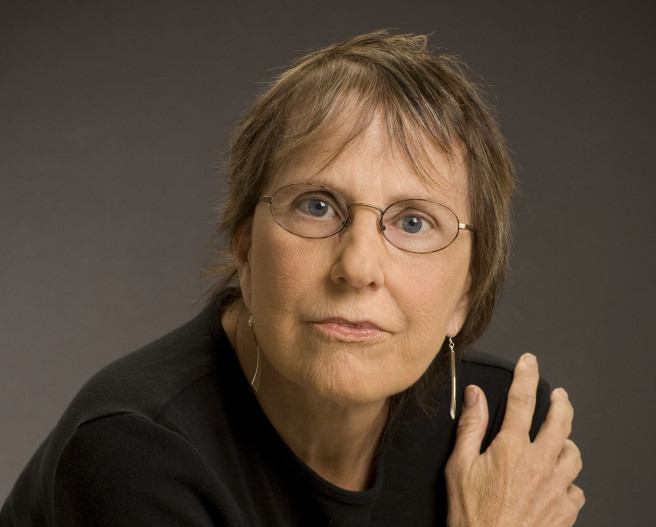
“I think that the horrific and comedic, in a very basic way, can go together as extremes of feeling.”
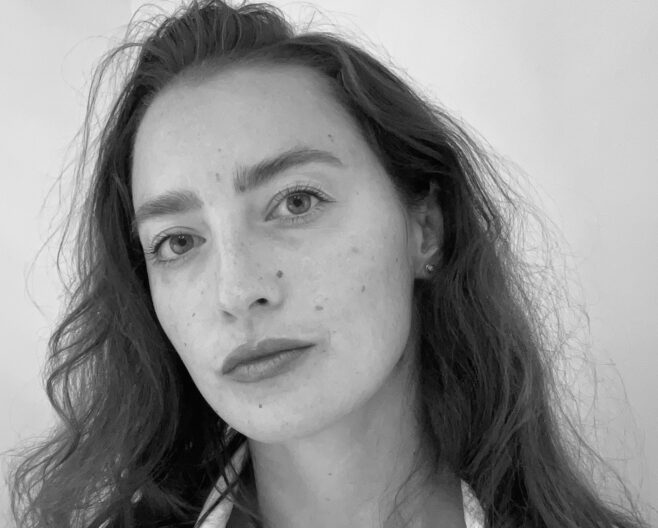
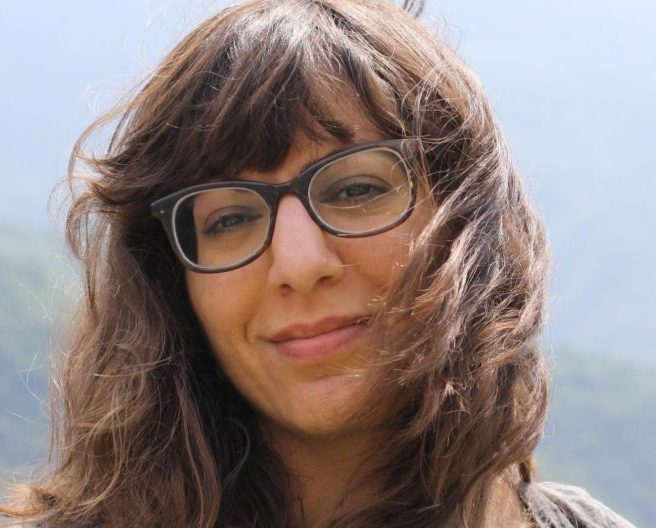
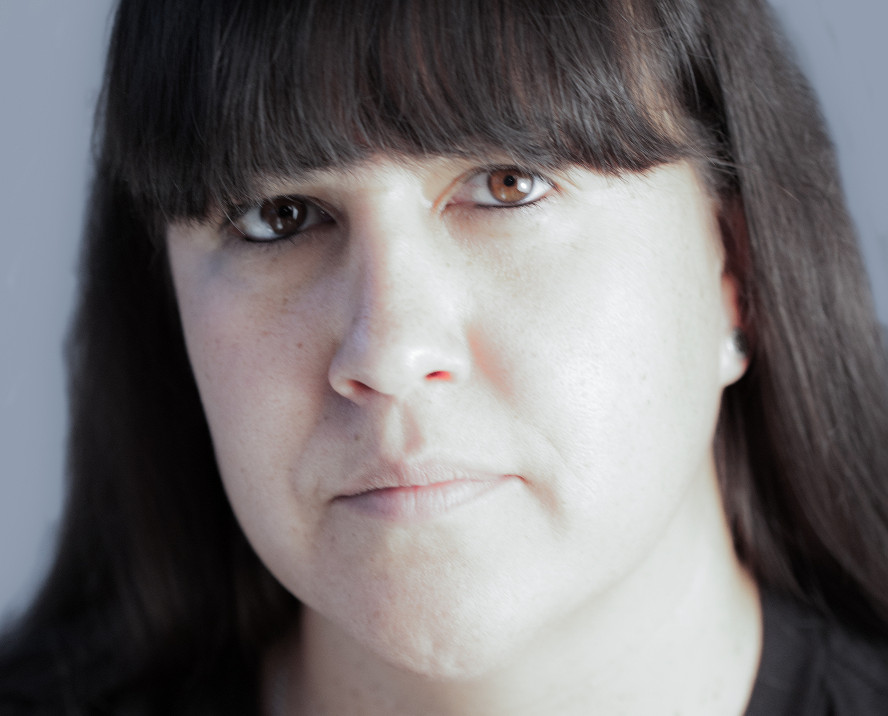
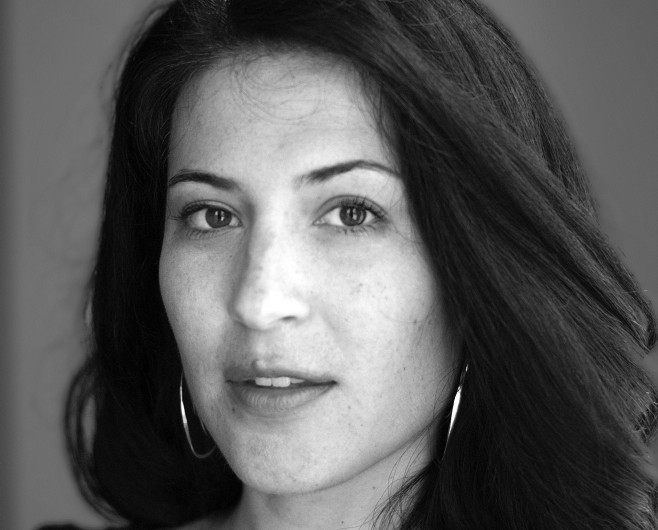
NATALIE SHAPERO
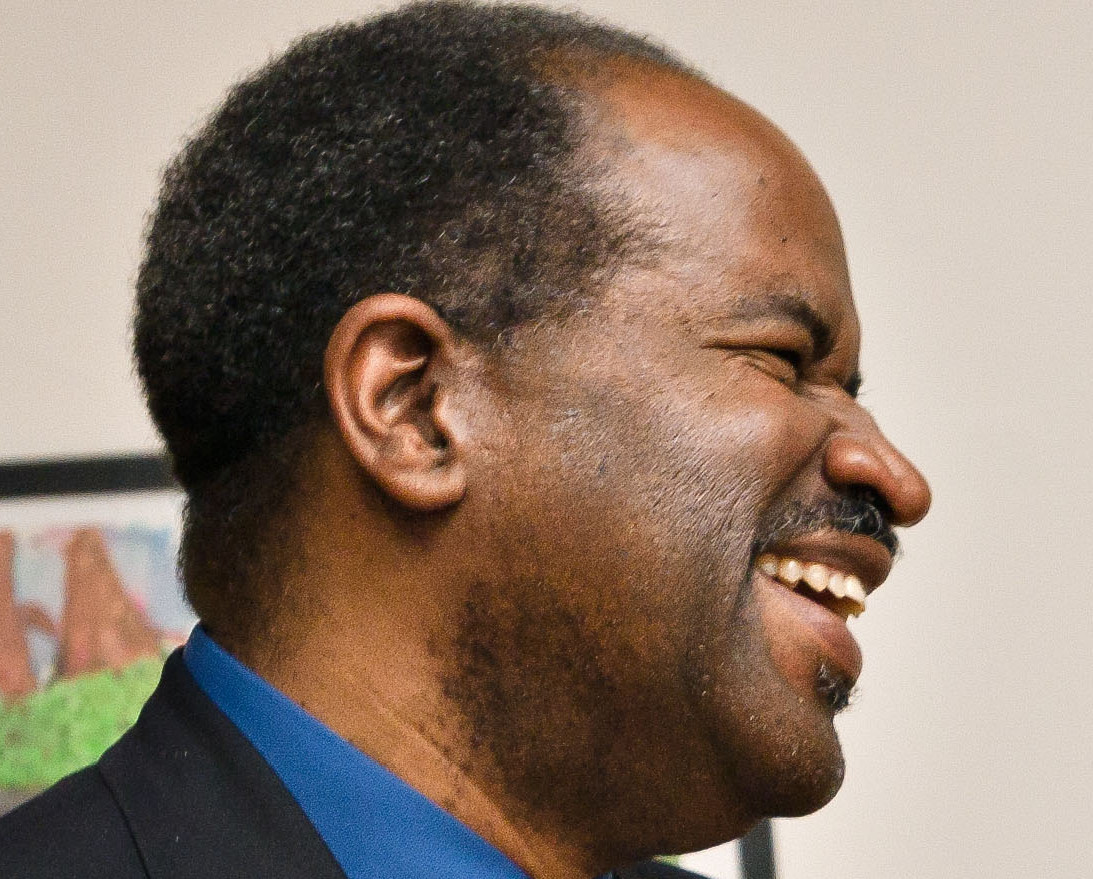
Interviewed By: Anthony Borruso
When I first read the title of your new collection, Stay Dead, it conjured up a Michael Myers-esque image for me of a demonic entity that refuses to die. And though the book itself is mostly concerned with the real and the mundane, it does have its fair share of horrific and haunting images: ghosts that permeate its pages, a narrator who repeatedly claims to have died and returned from the dead. There are poems that meditate on suicide, self-destruction, and the lingering depression that can follow personal trauma. Then again, there are many moments where panic and fear veer into humor, where a character who no longer wants to be called a “survivor” decides to nonchalantly “...[go] ahead and die” and “that’s called QUICK THINKING. That’s called WOMEN’S INGENUITY.” What do you think it is that allows the horrific and comedic to coexist in your poetry? Are there any technical or strategic ways that you’ve tried to mesh those two things?
Yeah, that is a great question. You know, I think that the horrific and comedic, in a very basic way, can go together as extremes of feeling. I’ve always been interested in writing about and into the ways that people use humor to deflect from discussions of difficult material. Or, to have those discussions, without really having them. I’m into those moments, even outside of poetry, just in ordinary conversation.
I can definitely see that.
Yeah, like when people use jokes to sort of break the tension in order to move away from something.
That’s why, when I’m reading your poems, the word “avoidance” comes to mind. There’s this sense that you are moving away from something. But then, I feel like the darkness in the collection has its own gravity, and it kind of pulls you back.
I think that’s a very good and useful read. I can say that, in some ways, a lot of my work is about not talking about things (laughs). I’m definitely interested in learning more specifically about, like, why is that? What are the circumstances under which we can’t say things that we really need to say because of constraints on what topics are permissible in different situations? My last book was very much about labor politics and thought about what you can and can’t say at work. Then again, it’s a project that spans multiple books, not necessarily the labor politics part of it, but just thinking about how to really push the extremes of how much you can talk about something without ever actually talking about it.
What I liked about this new collection, too, is that it uses a lot of ghost metaphors to do that. Like, it feels haunted by this trauma that’s on the periphery of the page, and that’s always bearing in on you. But it never fully gets there, and I think that’s the lure of it as a reader. In a lot of poetry workshops that I’ve been in, I’ve gotten a sense that other folks often want to push the poet towards revealing trauma and being more direct about the thing that they’re going through. I feel like your poems are such a good counterexample of that, that sometimes deflection can actually send you into the thing. Is that push to reveal something that you’ve had to deal with in workshops in the past?
I’ll tell you honestly, I did not feel that. You know, I’m 42, and I went to my MFA from straight out of college. That was not in vogue at that point.
Yeah, maybe the vibes were different.
Yeah. But...I don’t have any position on whether or not people should speak candidly and directly about their personal pain in poems. I definitely don’t write this way because I’m in ethical opposition to something.
No, totally, I get that sense from your writing. And I agree, I think people should write how they write.
Yeah, I mean, this is interesting, and I think it’s useful to say that my poems are not about poetry. I do feel that to be the case. I don’t have too much to say about poetry, and what’s in and what’s out, and how people should do it. I don’t feel like I write against or toward conventions in poetry. Though maybe I do self-consciously or whatever. I’m always trying to engage with things outside of poetry, because it’s just how my practice is, I guess.
Speaking of engaging with things outside of poetry, I notice your poems often have references to film and Hollywood culture. One poem from your latest collection takes its title from Julia Roberts’ iconic line in Pretty Woman: “Big Mistake. Big. Huge,” a retort to a snobby boutique owner who wouldn’t allow her entry in her store. In your poem, though, the movie line takes on a haunting quality as it is re-appropriated by someone who is apparently dead and “Strolling back into the world.” Another poem, "Larger Papers," describes an imagined film sequence in which a character “nicks / himself shaving…[and] the thin / run of blood is supposed to stand for some violence, / for something he did and is desperate / to cover up, but the truth will out–….” Why do you think these cinematic associations slip into your poems so often? Do you think it’s just a side effect of living in LA, being a huge movie fan, or is this kind of a natural language for you?
Okay, this is a great question. I think that I have a few answers. One thing is that in my previous book, Popular Longing, I was very, very interested in the way that people communicate at work, the personas that you have to adopt in order to please the bosses. When I was writing that book, which was a minute ago, I was reading all about labor sociology. For instance, there’s this text called The Managed Heart by Arlie Russell Hochschild, where she writes about a study of flight attendants, and how they resort to passive aggression because they have to be so positive all the time. You know, like, the flight attendant was getting shit from a passenger who was wearing a white outfit, and then there was maybe some turbulence, so she has an intentionally exaggerated reaction to it and spills Bloody Mary on him. You can always, I think, spill a drink on someone in the air!
Of course, the excuse is always there.
But she writes in that book about what has been coined “emotional labor,” which has gone on to have this very fraught life.
Oh, really? I didn’t know that’s where it came from.
I don’t know if she coined it, but she writes about how doing these jobs that require emotional labor, basically adopting a particular affect for a prolonged period of time because you have to in order to get the paycheck, is akin to method acting. So, from there, I became interested in method acting, which was not something that I knew a ton about.
Would you say that’s the transition that happened from your previous book to this new one? You went from performance in the workplace to performance on film and stage?
Yeah, sure. I wrote that book when I moved to California. And yeah, I was glad to be immersed in the film culture here. I love movies, and I do think that they have a lot in common with poetry in terms of their reliance on concision, elision, and, sometimes, narrative unity.
I’ve always thought poetry, too, out of all the different genres of literature, it’s really the one with the most visual and topographical elements to it, where the shapes on the page communicate something. Whereas prose doesn’t generally do that.
For sure.
Returning to that idea of workplace performance, which is still present in some ways in Stay Dead, there’s this moment in “Centimenter Ruler” where the speaker reflects on why they withheld a snarky comeback to a boss, saying “I did not say [it] because I was being at the time paid / to not say sentences like that but instead / to absorb….” Do you think that your poetry often voices the unsaid?
Yeah, I think that’s not too far from the tradition of the lyric. Yeah, yeah. In some ways, but maybe I am less interested in articulating the unsaid things than leaving them unarticulated. And I know that poem’s a bad example of this.
Haha, yeah.
But, often, I am interested in, like, what are the possibilities for inviting the reader to articulate it if the poem doesn’t?
Another thing I’ve been thinking about is something you said in a previous interview about the challenge of reading your poems aloud. Sometimes you have these poems that start funny, and, over the course of the poem, they turn into really dark, really heavy material that the audience doesn’t always know how to respond to. They sometimes just continue laughing in a way that can feel uncomfortable, or doesn’t mesh with the subject of the poem. In this recent collection, “Great Scaffold” felt like it could possibly have that effect on an audience. The poem has this funny refrain where a friend of the speaker keeps shrugging and saying, “BOSTON,” in response to anything she tells him. Even as the speaker describes unimaginable traumas and existential turmoil, he just keeps responding in that same flat way. Is this a piece that you find to be tonally challenging for people when reading aloud?
I think that you’re right in describing how that poem is trying to fit into that paradigm. I don’t read it out loud, though. And it’s not because I don’t want to deal with the audience’s reaction or whatever, but because it’s just a little bit too dense. I really try to, when doing readings, and again, this isn’t my manifesto for how readings should be, but I really like to read poems that are, more or less, fully digestible in the moment of hearing them. That way, you can kind of get the whole thing and not be like, okay, I have to go back and look that up.
That makes sense to me. So you tend to avoid something that doesn’t work out loud as well as it does on the page?
It’s just because that poem has this extended joke about being unable to remember a line.
The one that comes back in at the end, right?
Yeah, and I don’t totally trust myself to get that across. I think it would be an unsatisfying poem if you didn’t clock exactly what was going on. It’s also something that’s a little bit hard to read out loud because it’s complicated to sufficiently demarcate who’s talking and when. I have that problem also with the Plath/Bourdain poem.
Yeah, yeah. I love that one by the way, it’s called “86”?
Yeah. It’s like, I feel like I have worked a lot on what my out loud voice and persona and representation of the speaker of the poems are gonna be. Because of that, I’m less apt to read something where there’s a bunch of people and writers who are all talking.
Yeah.
It’s just a little clunkier, I think. And less streamlined, and less of an entertaining experience.
And “86” feels like its own genre that you have in a few poems, where it’s really stitching together a lot of quotes, and outside materials, and creating this collage-type thing where the poet’s voice sneaks in and out throughout the poem.
Yes, and I do think that those are not the best choice for out loud readings.
Obviously, you think a lot about what you’re choosing to read, but in terms of your performance, is there anything that you’ve taken away from that research on performance you’ve done, or just stuff you’ve learned from experience?
When I first tried to learn how to do poetry, I just did a lot of karaoke, which I still enjoy. I feel like I write a fair amount of my work to live out loud, and, you know, it is nice, if possible, to deliver a reading that is maximally engaging for the people who are in the audience. It’s not everyone’s bag to get out there and be a performer. I’ve also (laughing) seen super cool readings sometimes from people who are uncomfortable and just struggling to be on the stage. Doing public speaking, you know, I had a weird experience where I was part of a protest, and I was reading something that I…ugh. I’m not gonna tell this story, haha…I take it back.
Haha, well, like in your poems, there’s, on the periphery, the trauma of some public speaking ordeal.
Haha. I’m an English professor for my job. And something that I do want to talk to my students a lot about is the difference between writing for yourself, writing for your pals, and writing for anyone or for everyone.
Yeah.
I had an undergrad ask just last term after class, "What is the difference between a poem that you write for yourself, and one that you bring to the class? Am I bringing a poem that is for me, or a poem that is for everyone?" But I think that, when we’re engaging with it as poets in the world who are putting our work out, you want to think of it as a communicative mechanism. You know, if you’re talking to someone in a conversation, do you speak at a volume level that’s audible to them? Do you try to say things in a way that is modified in how it comes out of you? I think we can think about that as we’re writing on the page and sending it into the world. But also, I like to talk about those kinds of things with readings, too. People are giving up whatever else they would have been doing to be there, and I think, if it’s your bag, it’s nice to be able to, like…
Not torture them, maybe?
Yeah, yeah. Be a pro! And not ask for them to come to you. One thing that helped me a lot when I was younger was doing a lot of readings in bars. Which I still, in fact, like to do. But there are going to be people there who were not trying to come see a poetry reading. And it’s your job to invite them into it in a way where you can make it interesting or, at a minimum, bearable to them. Rather than be like, "everyone be quiet so I can read my diary!"
Maybe, since we’re talking about bar readings, we can transition to bar trivia. I’m someone who’s obsessed with Jeopardy! and loves doing bar trivia, and I’m always thrilled by the fascination with trivia and facts that your poems display. A favorite of mine from Hard Child, called “My Hand and Cold,” uses a pub quiz question about world capitals as a launching point for rumination on the significance of names and the fears that a mother has for her daughter. In “Quick Thinking,” the speaker notes that Ho Chi Min and Malcolm X share the same birthday (May 19th) and then declares, “I love a good fact.” Sometimes, facts in your poems are like an anchor, something sturdy and reliable in an otherwise disorienting world. Other times, your speakers concede that facts can be spun or manipulated or examined from new perspectives that alter their meaning–do you see your poetry as a place where truth and fact prevail, or as a means of testing how pliable facts are?
I hope it is the former. Because, you know, I let the emotional register of the poem go to some ramped-up places. All the fact stuff in there is supposed to be a counterbalance to bring it down. It’s also part of creating an atmosphere that is destabilizing for the reader, which is something that I’m interested in doing.
Yeah.
Where you are invited to feel how out of control the poem feels as it’s trying to navigate all of these different pressures and pulls.
Yeah, I definitely get that destabilizing feeling when, in a couple of your poems, you’ll make this statement that is so assertive and so sure, but it’s something absurd, like how if actors are in a scene doing something bad and God sees it, they’ll go to hell, or something like that. And it’s completely ridiculous. But at the same time, it feels like it’s kind of welcoming you into this funny nightmare world.
Sure. I think it’s an invitation or a challenge, or whatever you want to call it, to be like, here are the aspects of the book that are objectively indisputable, and that everyone agrees on. But are there other kinds of similar moments of indisputability that aren’t coded as such?
Yeah. Because it does seem like you do some research, and that you’re very open in terms of the subjects that come into your books, I was wondering how often you go into a poem with a specific subject that you’ve already articulated. Or is it the case that you’re discovering the subject as you write, almost like Richard Hugo says in his Triggering Town, where he talks about following things like sound, rhythm, and associative logic into the authentic or the “true subject” of the poem.
No. No. I plan everything in advance (laughing)
Really?! (laughing) You always know where you’re going?
I’m being totally serious. I plan everything in advance. I approach poems like little essays, and I’m like, this is the poem that is advancing this idea. I’m a huge notebook keeper, and I just keep notebooks with anything that could potentially be part of a project, and then just go through them periodically and try to figure out what goes together. In my Bourdain/Plath poem, I was reading The Bell Jar, and I had always been interested in all the food poisoning stuff in Kitchen Confidential. And his kind of pro-food-poisoning attitude. It was there, in that moment, that I was like, "Okay, well, I should write something about these two."
Yeah, and in that one, the way you weave those two texts together is beautiful. There’s such a good associative logic.
I think that sometimes stuff like that comes together right away, but more often than not, it’s a lot of reading and researching across things. The second-to-last poem in the book, which is called “Sorry to Eat,” was one poem where I had the first two-thirds of the poem written, but no ending. So I just had to put a pin in it, and say it’s just gonna be on hold until…
Until you’re, like, doing yard work and it pops into your head that that's the thing that needs to be there.
Yeah, I was watching Jerry Maguire on a plane. He gets fired at the beginning of that movie in a restaurant. And he says, "You think I’m not gonna make a scene at this restaurant? You think I’m not gonna draw attention." And I was like, "Oh, that’s the ending."
Note: This interview was conducted on July 30th, about a month before Shapero actually appeared on Jeopardy! You can see her impressive Final Jeopardy response here.
Interview Posted: December 1, 2025

MORE FROM DIVEDAPPER. (Drag left)