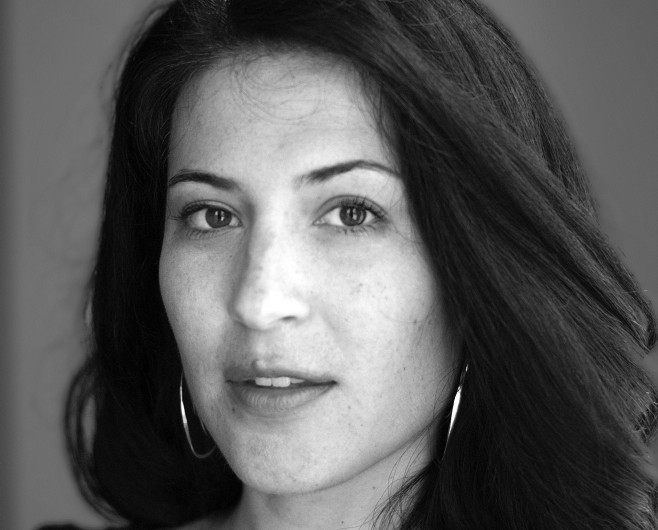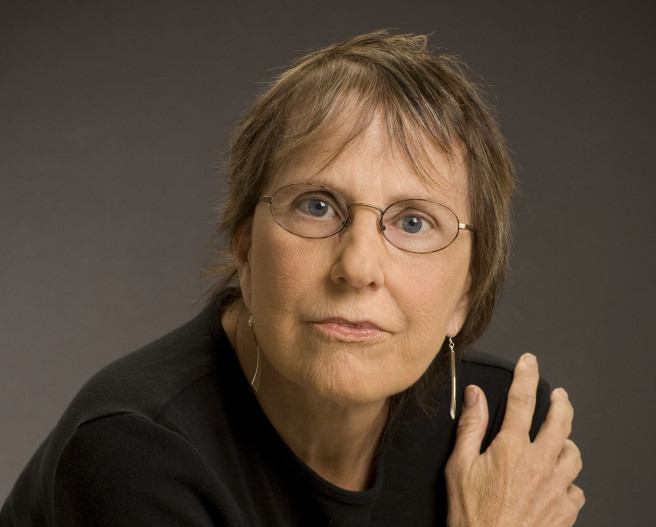
“The body is always moving toward bliss. ”
ARIANA REINES
Interviewed By: Taylor Lewandowski
How do you use desire and sex as a way to explore mystical experience or a relation to suffering in The Rose? I'm thinking of these lines in the poem "DIY": "In our pantomime of mutual need / Later he smashed all the butt plugs / & knifed up the dildos & oiled / & gouged my leather bed, oiled / The bedroom door. Shattered / A window sash. & when I tried / Stopping speaking to him he broke / The lock on the kitchen door & forced / His way back in."
I think I must have been doing this my whole life, in every book. For some reason, I guess it’s still a problem—the idea that what’s erotic and what’s mystical are separate. Or what’s physical and what’s sacred. It’s always been the same thing to me. The body is always moving toward bliss, even when it’s just drowned and poisoned by anguish, or even numb and half-dead. I think what amazed me about The Rose was that the guy who inspired me to write it wanted so badly to be seen. He wanted to be seen and studied, and he asked me to. I could have written ten more books from what I learned, just looking at him, letting him drive me crazy and driving him crazy myself. Maybe I will.
Terry Tempest Williams was your teacher at Harvard Divinity School. How did she influence the poem “The Economy”?
Terry is a fierce protector of everything that is wild. I didn’t know until I met her at Divinity School that she herself is wild. She went before me in everything—and she wrote the elegy for her mother in When Women Were Birds, which understood my suffering. I was so miserable when I met Terry—it’s a long story. I had seen my mother at her worst, the worst I had ever seen her in my life. It still scares me to remember it. I wanted to die. Terry knows how to reach you in your soul. I don’t remember what she said or how she said it, but somehow I had said to her, at least you are protecting something—you are protecting the Earth, you are protecting wild things. It’s so stupid only to have myself to stand up for in my work. But you are nature, Terry somehow made me understand. She made me believe it was worth it to stand up for whatever it is I stand up for when I write.
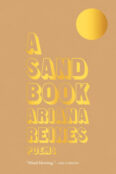
I was reflecting on your body of work last night, and I kept returning to the black pages at the end of A Sand Book describing this mystical experience on Allen Street in New York City, which reminded me of this really haunting occurrence Henry James Sr. experienced that's described in Leon Edel's Henry James: The Untried Years 1843–1870. James Sr. later called it a "vastation," or looking into this evil abyss, and only after he devoted his life to the work of Emanuel Swedenborg did this feeling dissipate. I also think about Saul's conversion on the road to Damascus, or this intense vision of light, that irrevocably changes him. These two new books, Wave of Blood and The Rose, are emanating from these singular, mantra-like fragments on the black pages of A Sand Book.
Ok, wow. I have to admit I have never been a big reader of William James, but I’m definitely conscious of the ways his work made space for me—and his presence was definitely there at Divinity school. I was a big reader of Henry James in my twenties. But I never knew anything about the father. And I definitely would not characterize what happened to me on Allen Street at the end of A Sand Book as “gazing into an abyss of evil.”
It never occurred to me that Wave of Blood and The Rose would somehow have emerged out of the things the sun “said,” and what a strange path that put me on, figuring out how to integrate basically a theophany, without any way really to contextualize it, or anchor my life around it… But when you connect them, it makes total sense.
Thinking about Swedenborg and William James… like, they were the western mystics of yesteryear. In terms of consciousness research, I guess I am building on what they described, but not consciously referencing them. I remember Swedenborg having influenced all the 19th-century poets I cared about, and I read a little Swedenborg, but I never really got that far. But I guess when I hear you say “an abyss of evil—" without knowing what the elder James actually experienced or saw—and how it was only through devoting himself to a certain path of mystical study could he dissipate that experience of evil…. Well, I do think on the planet we are currently directly confronting an “abyss of evil.” And it definitely feels to me that the path of the mystic, the path of magic, is the only way through.
Periodically, I will forget what the sun “said” at the end of A Sand Book, lose contact with my own primary mystical experience. And when I think about that—like if I can become alienated from my own personal experience, then how easy must it be to separate human beings from their infinite, divine dimensions in general?
Have you always felt this relation to mystical experience?
As a child, I always wanted magical, mystical things to happen to me. To the point where when they actually did start to happen, I felt almost made fun of, as if “god” was teasing me—“Isn’t this what you said you wanted?”
I think the problem I run into, when talking about maybe paranormal or unusual or theophanic experiences, is that because they are so sensational, they can seem to be more important than the subtler, more everyday ways that expanded realms of being are always here. Like when a dead relative appears in a dream, and you know that it was more than just a dream. Or when you suddenly know what you have to do in a given moment or situation: you feel something inside yourself, even “hear” something, and you act on that feeling, you act in fidelity to it.
Even the language around this stuff is so sloppy and interchangeable—I find myself saying the word “experience” over and over again. But it really is a crucial word, because it’s the precise vector that differs from a literalist, rigidly scriptural idea of the divine. That’s why I set up Invisible College: I wanted to study, like critically study, how poets have transmitted and preserved these unusual states of consciousness. The beauty of poets—since time immemorial—is that they speak from experience. Even when they lie….
Do you think poetry is more suitable to navigate and describe these mystical experiences?
The historical, the archaeological record would suggest that. Poetry seems to lend itself very well to, not just a groovier, more beautiful evocation of life than prose tends to be able to access, but yes, what we might call ancient and universal wisdom. Ancient, medieval, and Renaissance medicine was also described and taught in verse. Poetry is an aid to memory; it existed before writing existed– when speech and song were not quite so separate, and when language and speech were still understood to be sacred, to be magic. I’m here, wherever that is, “in poetry,” for the magic.
The Rose ends on a long poem, "Theory of the Flower." It begins: "Molly Bloom's soliloquy/ Is now canonical but for / To say her kind of YES / Remains heretical / YES to everyone / She's always in bed / Even when she / Isn't. Not me." It continues with references to others like Flaubert, Baudelaire, Guillaume de Lorris, Jean de Meun, JT LeRoy, Emily Dickinson, Anne Sexton, Joni Mitchel, and others. You use these instances and other examples in mythology and religion to enact an ancestral and symbolic relation to being/becoming a woman, but at the end, the body and experience overcome language. How does representation, as you write "I hate metaphor," fail to capture an experience, but also lead to opportunities of healing, association, empowerment, and ultimately change?
My sense of what makes poetry feel alive probably comes out of the “Not Ideas About the Thing But the Thing Itself” (Wallace Stevens) school? “Flowery” and “poetic” language used to disgust me when I was younger, maybe because everything femme seemed weak, and I didn’t want to be perceived as weak, or because “beauty’s” supposed weakness was no match for how vicious and overwhelming life felt. On the other hand, “bad” metaphor still bothers me, disgusts me. When it doesn’t feel earned, or when there’s something stiflingly beautifying about it.
On the other hand, it’s kind of impossible to think without metaphor, and actually, you can do anything you want with it, layer it like paint or musical notes, and it is beautiful…. and what’s wrong with beauty? When I say I hate it, I obviously love it, or at least kind of love it, in the same way I insult my lover’s intelligence in The Rose, but it’s obvious (at least to me) that I think he’s a genius. The best thing about poetry, as far as I’m concerned, is that meaning doesn’t have to be shoved into some boring trough and forced to do only what it can do in prose—pardon the Boomer Bob Dylan reference, but “the ditch of what each one means….”
As I understand it, Invisible College, an online community which started with a close read of Rilke’s Duino Elegies on Instagram Live, came out of your time at Harvard Divinity School and the pandemic?
Yes, except also I’d experimented with that kind of study previously at these gatherings in New York City called Ancient Evenings. It was a slightly different format, but after I met people in Haiti who were just on a completely different level spiritually, I felt like I had to change absolutely everything about the way I approached poetry. Number one, I had to get it out of school and college, and bring it into a space that was more celebratory, but also more sacred.
Do you have a specific example of this spiritual advancement?
Oh man, it would take ages—I’ve resisted writing about this for so long because, you know, sometimes the most powerful love needs to be treasured—even trying to talk “about” it feels a little bit violating. I’ll just say I had never seen a person in full spirit possession before, and I hadn’t ever encountered real wisdom in a human being either. Deep insight and profound benevolence: when you find both of these in a single human being, it’s a miracle.
I'm interested in this idea of vocation. It's not an obsession necessarily, but you mention these revelatory moments connected to the act of writing poetry, which creates this force.
I like the word "vocation," because that's also a word that is used for those who decide to take up the cloth, become a priest. There is a mission element to it. It’s a calling—answering a call—being called. Becoming an artist is like that, too—there can be a lot of flailing and struggle. Whatever it means to be a poet, I'm constantly being reeducated and reminded about what that is, because consciously, I wouldn't have chosen it. I think if I had a less fucked up family, I might have done something more respectable with my life. And there's more respectable ways to be a poet than the way I do it. Part of the vocation is bearing witness. I think Peter Gizzi calls it an ethnography of the invisible. Poets testify to realms and worlds that, for whatever reason, other sorts of people tend not to report on.
I think about your study of Job in Invisible College, but this idea runs through A Sand Book, The Rose, and Wave of Blood of bearing witness. The language acts as this tool to channel suffering and shift it into a different entity, like alchemy in a way. It does come back to the black pages of A Sand Book. I wrote down these lines related to Wave of Blood and The Rose from those pages: "THE SUFFERING OF WOMAN IS THE TRUE STORY OF THE UNIVERSE," "EACH THING TEACHES," "WHEN FACED WITH EVIL, LEARN ITS SECRET," "EVERYTHING HAS A NATURE, FIND OUT YOURS." These are relevant to both books.
I think you're right. That's what's funny about linear time, and maybe that's why poetry is so good for the mystical side of life, because it's not strictly linear. It has a beginning and an end, but it's closer to that spiral or the holographic toroidal orgasm of time or whatever.
So, The Rose and Wave of Blood are fraternal twins. They were written at the same time. The Rose started first, then Wave of Blood interrupted it, because the genocide in Gaza interrupted it, and then the two books stole from each other, fed off each other, threatened each other. They’re in a symbiotic, parasitic, twinship. There's a poem called "Cain" in The Rose that refers to Cain and Abel…
In a way, I think that what a poem or a book does for the poet may be very different from what it does for the reader. For me, these books mark the end of using suffering as fuel or kindling for art. Maybe the end of suffering’s fascination. I have been struggling with it all my life, and definitely in every book.
I’ve noticed people have a hard time dealing with or talking about both books at the same time. They came out six months apart, and I guess both deal with extremely triggering topics in seemingly disparate realms. The Rose may look like a frivolous book about sex, and Wave of Blood is dealing with a genocide, suicide, what it means to live digitally through waves of menstruation and grief.
But I guess this is why you see a connection between them and A Sand Book. When the sun said, "THE SUFFERING OF WOMAN IS THE TRUE STORY OF THE UNIVERSE"—it just knocked me flat. Like, I immediately knew with my entire being that that is true. But at the same time, I felt nervous because I can’t back it up rationally, or socially or whatever. Every cell in my body knew that was the truth. But I still have yet to live up to the fullness of what that means, and what it would demand of my life.
It doesn't seem like such a ridiculous idea.
[Laughs] I really need to learn to struggle less when I’m given an answer to, like, the entire meaning of life…
How did you use various medieval motifs and myths in The Rose? I'm especially interested in the idea of fucking a demon or the incubus entering the bedroom.
I've been working with medieval motifs since Coeur de Lion. I've always been attracted to medieval art and music. There's something very clear, sophisticated, and funny about this time that speaks to me. Our times are fucking medieval: ultraviolence, bread and circus, repressive state and religious power—with this technological and post-Enlightenment overlay…
I didn't know there'd be a whole medieval internet when I wrote Coeur de Lion, or how queer and also silly it would turn out to be. Silliness is an extremely important and underappreciated mode.
The Cow’s aim was to quite literally digest Modernism through the four stomachs of the cow. The Cow is an ancient, even primary, figure of the sacred and of wealth, and it returns in A Sand Book as the potential reverser of desertification, a literal, practical source of Earth’s regeneration. When I was in my twenties and feeling insane and sort of groundless, I wanted to know if, after Modernism, the sacred even existed, and if so, how and where? And what might the feminine have to do with it?
Now with The Rose, I'm also excavating why the Modernists were so obsessed with the troubadours. In particular, Ezra Pound, but all of them to some extent. So much about courtly love and Provencal culture kind of survives as vibes and innuendo—it continues to seduce across the centuries—through poetry. It's a culture that was suppressed by Catholics, totalitarian killers from the north….I wanted to ask what that culture of so-called courtly love really was, but not so much in a scholarly way—I wanted to ask poetry itself, if that makes sense?
Opening all that up was an interesting experience because the troubadour's poetry is very embodied. It's sexual, lowdown, and often just mean. A lot of talking shit. I really wanted to, like, seriously, philosophically ask: Why is romance so "inspiring?" Why is sex so inspiring? Why is it that what makes you want to write is kind of the same as what makes you want to sleep with someone? (if you’re a poet?) What makes you want to study the person you love– understand their face and their body, their mind and their soul, as though you were a priest, or a scholar, or devour them like a sacrament? What does all that have to do with culture? If anything? These questions probably sound overblown, but, weirdly enough, if you open any old poetry book, they’re all right there. Staring you in the face from a thousand years ago. The same mystery.
You also reference Medea and Sappho periodically in The Rose.
Yeah, it’s almost like Medea is the mother and Sappho is the daughter. I had done this whole huge study of Medea– the Pasolini movie, the Seneca and Euripides plays, I did a 25-hour performance at Performance Space when the pandemic was just beginning to ease up– and I’d had kind of a wild experience teaching poetry in Tblisi (Medea was from Colchis, which is now the Republic of Georgia) where a guy ritually slaughtered a ram… another long story– it made me realize that the whole myth of the Golden Fleece hadn’t gone away, and that maybe it wasn’t a myth, that maybe we hadn’t yet gotten remotely close to understanding who or what Medea really was. I felt like her spirit was talking to The Rose on behalf of every terrifying, misunderstood woman, and maybe on my real mother’s behalf. Maybe she represents how immense the suffering in a woman’s heart can be. I like that she is both an insistent and a mysterious presence because that feels accurate to how hard it still is to really see a woman. And Sappho, I felt owned every brief poem in the book, any fragment of heat. Secretly, I think Sappho owns every single love poem ever written in the history of the world.
I want to return to this idea of sleeping with an evil entity to understand it, and therefore change it into another force.
Oh, yes. Sleeping with something evil in order to birth magic.
Yes, exactly.
Sleeping with the devil. Sleeping with an incubus. Or an animal. Or a god. With an extremely gray area around consent…. The endpapers in The Rose show almost cartoonlike Medieval depictions of the conception of Merlin. There were lots of legends about Merlin, and the images in The Rose show his mother in bed with a devil-looking guy. He happens to somewhat physically resemble the guy who inspired the book, but I realized that there was a key to feminine desire in there. On some level, if you want to give birth to magic, you have to open yourself to the more-than or the beyond (even less-than) human. And maybe that goes back to the Virgin Mary and folk tales like Tam Lin and other kinds of “immaculate” conception. There are many stories of Divine insemination across cultures…. Maybe secretly, in her soul, every woman wants to bring something truly new into the world.
Well, what is this danger of sleeping with a demon? Yes—it could result in magic, but it also could lead to self-destruction or an irrevocable change.
I guess that’s another reason why I love those images. They get at something that feels true in my soul. Sex is never truly or merely safe, at least not in my experience. You can get pregnant, you can get sick, the guy can be psycho, it can always ruin your life. Politically, socially, medically, this is literally true for women in the United States, and only increasingly so. Maybe this is why love has also always felt so dangerous, and also—demanded such courage.
Interview Posted: April 2, 2026

MORE FROM DIVEDAPPER. (Drag left)