“ I’m always concerned with what's happening outside the frame.”
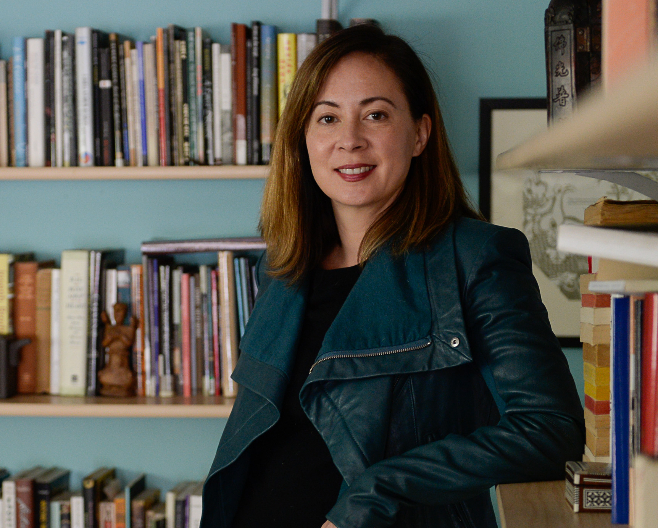
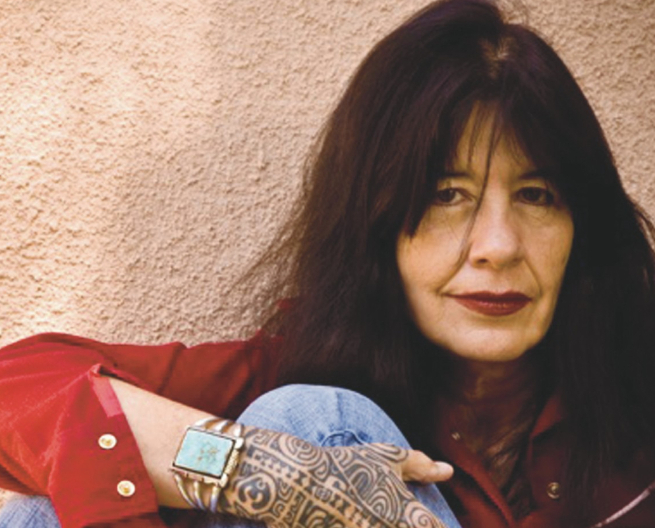
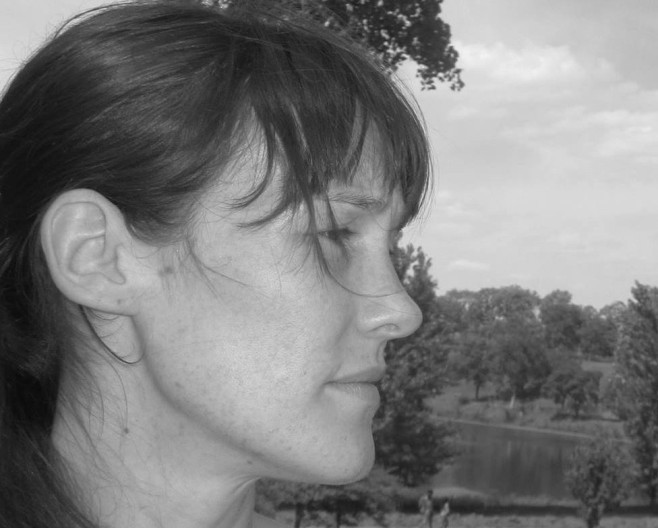
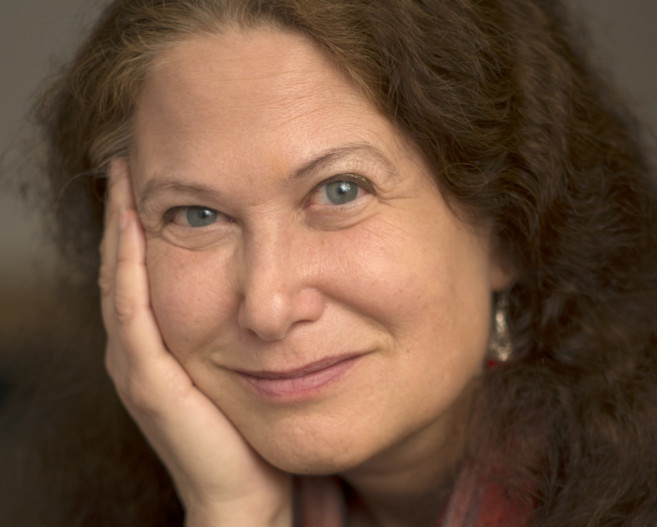
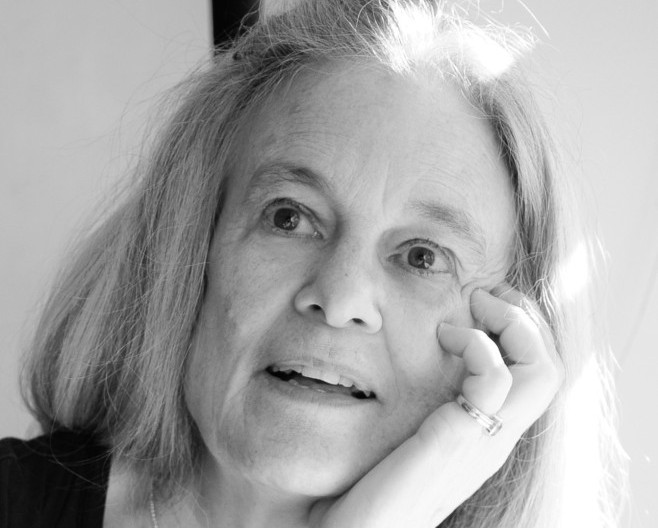
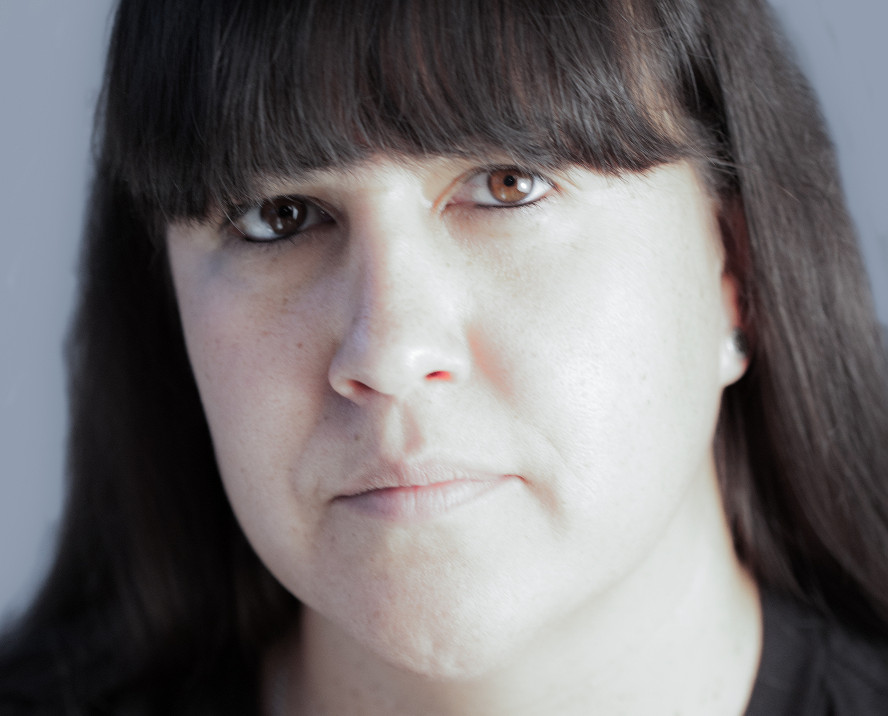
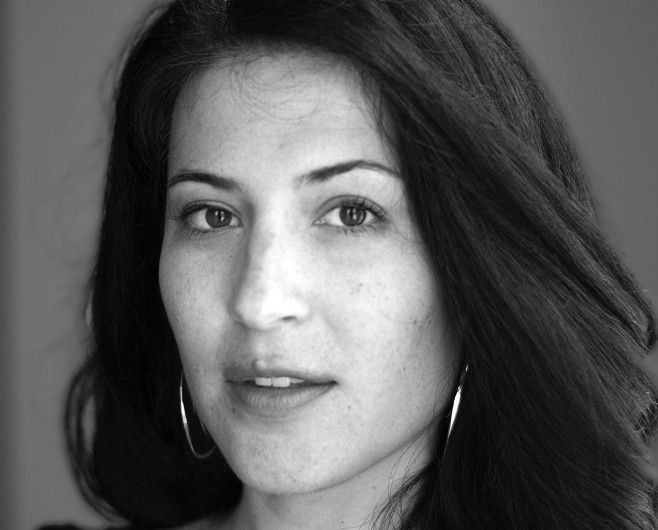
PAISLEY REKDAL
Interviewed By: Anthony Borruso
Are you excited about the book coming out?
Not really, no (laughing).
Haha, is it like when you get to a certain number of books, maybe the glow of that disappears a little bit? Or is it just stressful preparing to market it?
Well, Heritance is such a different book than other books that I've written. In some ways, it's a lot more personal. It's also a lot more philosophical. So I have a lot of dread about its appearance in the world, actually, because when you do something new, people either like it or they don't. Especially when they might expect a certain style or subject from you.
Yeah.
Also, West: A Translation was a lot of fun to produce; it was a lot of fun to read from because of the videos. It was an interactive project.
Yeah, I really enjoyed that. It's a very interesting collection.
Heritance is a very quiet collection, comparatively. It's just a different gear to work in.
West has a lot of persona poems, which creates separation from the self. Nightingale, your previous book, too, has that layering of myth onto its stories and all of these different voices that enter it. How did it feel to return to a voice that is more closely aligned with your own?
In some respects, it was very easy to return to my voice. For essentially two collections, I was channeling aspects of myself through telling the fictionalized stories of other people. Coming to this newest collection, it felt like a dam had burst, to use that cliché, because I think there were always pressures that I'd had about my family life and thinking about my family life and thinking about certain moments of American history, that once I was able to access my own feelings about these subjects, the voice in Heritance came very, very quickly, which was a surprise.
But it is…I don't know how to put it….It's a book of poems that I don't think I could have written unless somebody was dying. Let's just put it that way.
Yeah, yeah, I see. Maybe that’s why the collection does feel so urgent.
I want to talk about the book’s epigraph: “Tell me about a complicated man,” which is taken from the opening of Emily Wilson's lauded translation of The Odyssey. Honestly, you couldn’t have chosen a better time to include this quote! Did you know Chris Nolan's film would be coming out around this time, when you made that your epigraph?
Yeah. I hadn't known about that or thought about it; I was one of those people who wasn't paying any attention to Nolan’s film arrival date, but I actually watched it recently and I'm maybe one of the few lit people that liked it.
Oh yeah, I enjoyed it too. I thought it captured a lot of the book’s touchstone moments really well. Wilson was pretty critical of it, though. In her London Review of Books essay, she said it was all spectacle and no heart.
I thought it was a good movie, but I get her criticism. I think that one of the things that people love about The Odyssey is that, at some level, it is a family drama. It is the story of Penelope being reconciled to Odysseus again and the personal work that Odysseus has to undertake when he goes back to Ithaca. He has to win Penelope’s love again. Many of those epic poems, they’re not just stories of slaughter and war but about home and domestic life, and one of the things that I appreciated about Nolan's adaptation was that he wanted to drill down into that question of, “What does homecoming mean when you’ve violated ideas of home?” If home is a place of civilization and culture, when you violate other people's homes, do you get to return home yourself? One of the reasons I liked that, going to my new collection Heritance for a moment, is because it makes me think about the Vietnam War and how it subtly, but maybe powerfully, affected my own family. My uncle almost died in Vietnam. My father was a non-combat veteran of Vietnam who, I think, was philosophically really changed by that war and its impact on American culture. He was somebody who went to war because he believed that this was what you were supposed to do as a citizen.
Yeah, that’s something you speak to in your poem “Dulce et Decorum.”
Yeah, exactly. Later on, my father turned his military service into a very self-wounding narrative, which is like, “I did this, and I came back home, and why isn’t my country giving me a good job and more opportunities and a better life?” As somebody who's biracial and has seen things from my mom's perspective, why should this country be good for you when it hasn’t been for many other people, especially women and people of color? But that idea of who fights and dies for our country or who sacrifices for our country or gets sacrificed by our country, and who supposedly should reap the benefits of all that I thought was an interesting conversation that Nolan's film was having.
Another reason that I chose that epigraph was that my father was very interested in the classics. He took Greek and Latin because he got a number of free classes while working at the University of Washington as an administrative assistant. My father was anxious and angry. He was kind, but he also held a lot of racist and sexist beliefs, even as he was also incredibly smart and well educated. He drank. For him, a conversation meant starting a fight. And on top of all of that, he was also loving. He was like Odysseus, a “many-turning man,” as they would say, a complicated guy, morally.
Yeah, and I definitely felt that when I went from the epigraph to some of these poems about your father, who, as you say, is described as quite the complicated person. But I feel like that quote resonated in other ways, too. It made me think of The Odyssey as a literary inheritance, a story that has been passed down orally and textually and cinematically, carrying the past but continually altered by the present. This quote, too, suggests the poet as a vessel for something greater than themselves, a kind of mouthpiece for the muse. Can you speak to the idea of doing an invocation, and what comes from announcing the start of a collection in this Homeric way?
It's funny because I immediately think about Nightingale, which opens with a poem titled “Psalm.” “Psalm” is, in some ways, an invocation that a Christian, or at least post-pagan text, would use to begin an epic, as pagan epics start with an invocation to a muse. Not being a pagan myself, and having gone to Catholic school, though not necessarily being a believer in the divine, writing a psalm was as close as I could come to a spiritual or metaphysical framing of my text.
As for inheritances, I think Heritance is about a series of complicated fathers. There's bad teachers. There are complicated male work colleagues. There are also literal fathers. And then there are, as you point out, literary texts that we inherit as well as the institutional and social values that might have shaped these texts or are contained within these texts. I’m somebody who directs a center at the University of Utah, who may represent particular institutional values that I both admire and find occasionally problematic. That question of cultural inheritance is really important to me because I've got students I work with and academic or oral history programs that I'm ushering into the future. When it comes to inheriting bad institutional values—say the structurally racist or hierarchical values that do long-lasting damage to people and communities—I think we have this idea that those values are something that other, unthinking people inherit but that we manage to sidestep if we're smarter than that. But we aren't smarter. These values can become so powerfully embedded in where and what we study, who and what we support that they turn into unthinking reactions and beliefs. We are steeped in historical traditions, whether cultural and literary, or familial and institutional. And the question is always: Which version of the past and its values do you want to support or reject? It's not as simple as saying, “Well, I absolutely discard the past.” I was thinking of Hannah Arendt's ideas of modernity, which argue that you don't really discard the past but instead use the study of history as a way to examine which of the past’s social values you continue to support. In many ways, you're always choosing from the values of the past, even if it means you finally discard them.
Yeah, exactly.
A sense of history is important because it allows you to formulate what beliefs you want to carry forward, and I think that sense of self-selective agency is important for anyone to recognize. Because we're all responsible for how the future develops.
Yeah, that idea feels really present in “Dulce at Decorum,” which is centrally located in the book, and it feels like it gets to the heart of the book in a sense. That title, as you allude to, is taken from a patriotic Horace line that was borrowed and subverted in a Wilfred Owen poem about the horrors of war: “dulce et decorum est pro patria mori,” meaning “it is sweet and fitting to die for one’s country.” Examining family narratives alongside political and historical ones, your poem, like Owen’s, interrogates the stories we choose to tell and what their function is. Though much of the poem orbits around an image of your father recovering in the polio ward, its associative sprawl manages to touch on many other topics, including FDR’s bout with polio, New Deal art, the bravery of the first female polio scientist, and the suffering of Navajo miners who were exposed to Uranium. Ironically, the bravest act undertaken in the poem, the female polio scientist who injects herself with the virus as a test, not knowing if it will kill her, is performed by someone whose name the speaker can’t recall. Can you talk about the process of putting this seemingly free-wheeling poem together and what insights it might have given you into the intersections of personal and collective memory?
That's a great question, and a big question, but I started the poem with an image of my father in the polio hospital, which is a childhood experience he often talked about. It was a seminal moment for him for obvious reasons. And then I just started riffing, to be honest. I thought: “Oh, FDR had polio.” And then I started thinking a lot about FDR, and as you point out, the New Deal and its social projects. But then I was thinking about the irony of the same person simultaneously signing the executive order that puts Japanese Americans in incarceration camps, and then turns around and says, “Well, we should hire artists to document what's happening in America,” and then they go out and they document incarceration camps like Topaz through photographs.
And then FDR doesn't even look at them, right?
He doesn't even look at them! And I think that was the final irony that finally cracked open what connected all of these different narratives, which is the role of interpretation in art. Why do we make and look at art about war and imprisonment if it doesn’t move the needle? What does it mean to make political art we don’t read or see, or that we misinterpret if we do read and see it? Like, my father in the poem hears the Wilfred Owen poem getting read to him, and he misinterprets it. He thinks of it as a great paean to war and sacrifice.
Yeah.
And then he misquotes it to my grandmother before he volunteers for Vietnam. Which leads to the central line of the poem, which is “I don't understand what the point of literature is if people are such terrible readers of it.”
That line really stuck with me!
Thank you, but yeah, that line could be applied to any cultural product or institution, not just literature. Like, what is the point of art museums if we go in there and we misread the artists’ work, and we misinterpret what we see? How is it we can watch all these sci-fi TV shows and movies about the destruction of fascist interstellar regimes and then go vote, eagerly, for people like Trump? It also makes me wonder if there is another value to misinterpretation that has less to do with solving immediate social problems and more to do with building future social memories.
Yeah, that felt like the unspoken question beneath your line. It does feel double-edged in a way, where there's a chance to subvert and to defy certain things through misinterpretation.
My misinterpretation of the polio scientist is just the fact that I can't remember her name. So, to a certain extent, I absorb her into these institutional narratives of bravery and heroism. Whereas, would she read herself that way? Is it valuable seeing her that way? What's valuable to all of us as a collective society? But then you flip that and you look at the Navajo miners’ children who misread the sprinkling of uranium around their house. They believe this is sacred corn pollen, so they eat it and they poison themselves. They interpret the uranium dust as something that is giving them life, but in fact, it's killing them. And later on, of course, they know exactly what's happening, and they interpret the meaning and value of uranium to their community in more political ways.
This question of how we interpret the past is something that really fascinates me. Because oftentimes, the only way we can access the past is through historical sources, which are themselves interpretations of archival data, which oftentimes leave out the stories of marginalized people like the Navajo miners.
That’s true. And when they figure out that they were being poisoned, that's when the archive cuts out, right?
Exactly, the archive I was working with ended when its funding ran out, which was just as the Navajo were starting to file RECA claims over being poisoned by uranium. We know this, but we have to remember these facts from the other side of the archive. You have to imagine and recreate what’s been left out, the stories that weren’t recorded. That role that creative fabrication plays in historical narratives is something that I was really fascinated with while working on West. And I think when I was writing Heritance I was more aware of how I, too, am a constantly active narrativizing presence: as a poet, I’m always interpreting, making art, interpreting art, making art, interpreting art. At the same time, as the director of the American West Center, I’m institutionally compiling the stories from which other people will make new histories, and possibly make new art.
Yeah.
But misinterpretation, as we were talking about, becomes a really powerful collective event if it can inspire us to better action, even if it's based on wrong interpretations of the past data.
I think about that with “Whistlejacket,” that long poem in the collection.
And that's the one that responds to a painting by George Stubbs?
Right, exactly. In a way, it's a completely direct painting. It's a painting of a horse. We all know it's a painting of a horse. But why is there no background? Why is it on this complete blank of a screen? Did Stubbs just stop, or was the blank background necessary, its own form of meaning? And in that poem, I'm wrestling with the legacy of another complicated man, this professor of art who likes the painting because, in some ways, it denies the humanity as seen in more conventional representational art. And this professor is also a sexual harasser. He's not such a good guy.
Yeah, you get that implication in the language.
Yeah, yeah, he's not such a great figure; he has these hierarchical values of art, that great art shouldn't be “feminine,” meaning it shouldn't be about bodies or real-life domestic experiences or look “too pretty,” and he also suggests that women artists are probably more exciting as potential sexual partners than artists. I didn't like that, for obvious reasons, but at the same time, his ideas of there being such a thing as great art I did find exciting and maybe even necessary because it inspired me to be more ambitious as an artist-writer myself. So, going back and forth between our views of art, am I deliberately misinterpreting him in order to become my own ambitious self in its best possible iteration? If so, maybe there's some value to that.
Yeah, and I like how you allude to those difficulties in the title of the collection itself. In an interview, I saw you commenting on how you chose “Heritance” rather than “Inheritance” because it's more of an active word. It embodies things being in flux and never totally fixed.
Yeah.
There’s this admitting that whatever we take from our families and the world isn't constant; it's always shifting and its meaning is changing. Did you feel like that idea related to the way that you structured the book? Like, the way that you sectioned it off, or how you included more father poems and the titular poem toward the end?
I really struggled with organizing the book. And I think I ended up grouping them around kinds of themes. Maybe you shouldn't admit this after it's published, but I'm not wedded to this in terms of the structure.
It feels like a book that would be really hard to organize. Like just looking at the types of poems and themes and that idea of flux.
Yeah, I think the reality is I rarely read from cover to cover with books of poetry, because I feel like poetry invites you to just go back and forth anyway. Most collections of poems that I've written have been hard to organize because I'm trying to figure its shape out. I don't want a chronological argument. I don't want to group things too closely by theme because I want people to start seeing things radiating across the collection.
I did think about this idea of an active inheritance in almost every section. Do I inherit rage from my mother? Do I inherit any self-hatred around being biracial and, if so, why? And is that self-hatred for being Asian or for being white? Maybe it's a little of both. As an artist, do I inherit misinterpretation? And then with my father, who's dying, his fascination was with inheriting money, which is funny, because he was making up the amount of money he had to gift to his heirs (laughing).
Haha, he claims to have millions in your poem, “Heritance,” right?
Yeah, the millions! I'm like, where are these millions? Would that it were so, Dad, would that it were so.
But his delusions were, for me, a fantastical inheritance, which I was interested in because what happens when we inherit nothing more than an imagined family story?
You know, this actually reminded me more of O Brother, Where Art Thou than The Odyssey because it revolves around this invented treasure that the protagonist wants to find.
Yeah, yeah, I hadn't thought about that.
So there's a comedic impulse there, I think.
Yeah, well, it is kind of funny. You know, when someone starts to lose their mind at the end of life, sometimes they can say something that's devastatingly true. And it's piercing, but a lot of times, they just say things that are hysterically funny and awful.
I didn't put this in this collection, and it's going to show up in a couple of poems in this other book I'm slowly writing, but at one point my dad, who suffered from alcoholism, got drunk one afternoon and was urinating on himself, and he refused to change his soiled pants. And my dad and I stood there arguing about whether or not he should take off his pants so I could get him into clean ones. At one point, he was yelling at me, saying it wasn’t the alcohol; it was the pants that were making him pee. I was like, “What are these, magic pants, Dad?” He goes, “Yes, yes, they're magic pants!” And I'm standing there, the house smells like urine, and I'm standing there yelling at my dad, thinking, “I'm yelling at my dad about magic pants.” It’s absurd, but sometimes awful things become almost comedic, in a dark way.
Yeah, definitely.
I wanted to think too about how many of your poems have an ekphrastic impulse or enter into conversation with particular cultural and historical artifacts. For instance, Heritance includes “Whistlejacket,” that response to George Stubb’s painting, and “Dulce et Decorum” repeatedly finds your father’s likeness in Grant Wood’s portrait of a young boy, Plaid Sweater, which doubles as the book’s cover. West: A Translation, your recent hybrid book about the Chinese and other marginalized Americans who built the Transatlantic railroad, meditates on what remains from that railroad and is accompanied by a multimedia website that includes hyperlinks to additional poems and archival short films that your work is narrated over. In the final section of Imaginary Vessels, there is a series of sonnets that responds to Andrea Modica’s photographic skull portraits, which is a really awesome sequence where you sing the beauty of these skulls, as well as the losses and histories that they represent. And I guess it's partly your job, too, as an archivist, but can you talk a bit about how you choose which objects to respond to?
Mostly, I feel that I don't choose the image, it chooses me. I love looking at visual objects. I always thought I was going to be a visual artist.
Yeah, I get that.
So, I love going to museums, I love looking at paintings, I particularly love looking at photographs. I find them endlessly fascinating. And oftentimes, I just feel a heat, almost in my thorax. The Greeks called it your thumos, right? Like, I feel this heat coming right there, and I'm like, there's something there.
I start with an image, and I start writing, and oftentimes it unlocks something in me. I think that's one of the reasons why there's such a drive towards the ekphrastic because it's exciting to feel something working on you. And then you just chase the feeling down.
I notice a lot of superimposition in your poems where you're showing Grant Wood's painting, but then your father overlays the painting. Or in “The Touch,” that moment where you're holding the Vietnam veteran's hand, and then it's almost like two layers of superimposition, where you're seeing your father as the Vietnam veteran but you’re also a poet recreating this vulnerable man’s plight. How do you like working with something off the page that you can be in dialogue with?
Well, this speaks to one of the problems with ekphrastic poetry in general, which is, if not done well, it actually becomes just an illustration.
Yeah, or it feels like incomplete.
Yeah, exactly, the question with the ekphrastic poem is always, “What is my language doing that the image can't do?” If you simply describe what's there, you're nothing more than a caption to the image.
That's such a good way of putting it.
As soon as we see an image, we start to narrate it in our minds. First, what’s happening in the image, then what the image might remind us of, which is usually something very personal. We're immediately interpreting and re-inscribing the image in our own way, and in doing so, making it its own work. The work in our own minds becomes a very different kind of work of art than the thing that we're looking at. I really enjoy speaking back to the image, whether it's overwriting it or relocating it in a completely new context.
I won't ask for a prompt, but do you have ways of thinking about art that you feel are productive for you? Maybe an approach so that when you get that gut feeling, or that feeling in the thorax, you can make the work yours, or animate it?
I think this is why I'm interested in photography the most, because I’m always concerned with what's happening outside the frame in order to create depth. A photograph is rather like a poem in the sense that it usually starts with a real event, a real person, a real object. That's why I love photographs; you can ask, “Who is the person who chose that? Who is the person that excised this one thing?” And that's why I like Whistlejacket. You have a horse, but most of that painting isn't the horse, it's this absence. It's just this olive green color.
Yeah.
And it's so evocative of the field of the imagination itself, the field of time in which the one image exists briefly and disappears. Yeah, I think focusing on what's not there, focusing on how the thing got there is probably the best kind of prompt.
I love that, and it brings me to a line that kept resounding in my head as I read Heritance, which is from Wallace Stevens “The Snow Man,” where he describes this moment of beholding “Nothing that is not there and the nothing that is.”There’s a lot of absence and negation throughout the collection.
Yeah, that's there.
And it even starts with the very first poem of the book, “My Brother.” I don't think you have a brother, right?
Haha, no, I don't. I'm an only child.
Okay, good, so I read the poem correctly. In it, you conjure a sibling for the only child speaker who can help her weather the eventual loss of her parents and former selves, someone who can “walk with me now / through the woods to stare with me / into Death’s eyes.” As Death, seemingly a stand-in for the speaker’s mother, becomes less tangible over the course of the poem, her “coffee breath” and smell of Jergen’s body lotion giving way to a “gassy, dissolving face,” the brother gains definition so that by the end of the poem the speaker can believe “our parents never abandoned us,” the first-person plural pronouns embodying the brother while not fully embracing his individual presence. It’s such a beautiful and vulnerable poem, and almost childlike in its imaginative desire, like I can see a young only child wishing for a sibling to share their joys and pains with. Did you know this poem would initiate the collection early on in your writing?
Hmm, no. I struggled with whether I wanted it to be the first poem of the collection, but when I got to that end and thought about it some more, I realized the collection was about all the ways in which we have different kinds of failed or disappearing parents. There are literal parents, and then our mentors, our teachers, the social figures we look up to, even our politicians. I feel like these last 10 years have been a series of parental abandonments.
You can say that again.
And I think that's why your reading strikes a chord with me, which is that the brother becomes a stand-in for anyone reading this poem, which asks, “How is it that all of us just got abandoned?” I think there's such a sense of social collapse that a lot of us are struggling with right now. And so my desire for a brother is, on the one hand, very real. As an only child taking care of aging and dying parents, I really wish I had a brother.
But more importantly, I just want somebody else to recognize that what’s happening to us all really is happening. All of these massive changes are occurring, and I don't want to be the only one witnessing them. To open this collection with that sense of both familial and social loneliness was important for me.
I like how you put that. It's woven together in that poem. Another moment of absence is in “Bob and Carol,” a poem that meditates on a childless interracial couple who were close family friends and regularly attended gatherings; the speaker negotiates her choice not to have children through this couple’s. Opening with the mother’s fixation on Bob and Carol’s childlessness, the poem gets at the pressure to pump out one’s own progeny as well as the many valid reasons one might choose not to, such as not loving “the future enough to produce more of it.” One thing I enjoyed about this poem is that it questions the procreative urge without judging it or entirely dismissing it. How do you think you managed to write about this increasingly politicized topic with such care and nuance?
If I had one ethic that I went into the collection with, it was this desire to be as psychologically accurate to myself as possible. If I was going to write about myself, I was going to be as honest as possible.
Yeah.
And I think people aren't going to like that. But I can accept that.
That happens to be my favorite part of the book. Like, in that poem, when the speaker says, basically, that she thinks Bob and Carol are obsessed with her because she’s biracial like their child would be, it's such a moment of pure narcissism in a way, but it's also so blunt and real. We think like that, especially when we’re hungry for connection.
Yeah, and then to come to the accurate realization that maybe they never thought about me. There's a wonderful line by Alice Fulton where she says, “The thing that makes the whole world smell like the inside of your nose.” That was something that I was thinking about when writing this book, which is, if you're gonna write about yourself, you have to take on this very egotistical, egoistical perspective where you become the center point of the poem’s world, at the same time—to make the poem resonate with a reader—you have to admit your perspective is likely wrong. In fact, our interpretation of the world is often wrong.
Yeah.
And so, going back to your original question on writing about childlessness, when I said I wanted to be as honest as possible, I think that it would be dishonest to say, “I am completely resolved and happy about not having children.” I think it's the rare person who would say, “Yeah, I have absolutely no doubts about my biggest life decisions.” I guess I just don't trust anyone who has no doubts about any position. Even my atheism is really more agnosticism. It's the height of narcissism to assume you know that there's no God.
I'm not much of an astrologer, but I've recently had a Libra described to me, and you sound like one. I’m getting a lot of balance, fairness.
I'm actually a Capricorn, which is depressingly on the nose. They're very practical people.
Oh, okay.
But I do think it's important if you're going to write about yourself in the ways that I wanted to, that you keep asking yourself, “Do I really believe this?” I think that's one of the reasons why the poems tended to be even longer than the poems I write normally.
Yeah, that makes sense.
I’d love to talk more about West, which was a book-length exploration of the transcontinental railroad that was complemented by a multimedia website. The site is really fun to explore and elegantly animates the archives that your poems respond to. I was wondering whether you felt readers received this work differently because of its unconventional format. Did having the website make the book more accessible and interactive? Would you create another digital companion like this for your poems in the future?
It's funny because I see the book and the website as independent works, but also complementary ones. They're independent in the sense that the translation actually is different in some places, if you really did a deep dive. But they're also different because they ask and allow for very different kinds of readerly engagements. One of the things that I worried about with the book was, “How can I preserve some of the ergodic qualities of the website?” Ergodic just means non-random readerly selectivity, where you have some choice in how you choose to navigate a text and assemble its meaning. It's usually used for postmodern, very experimental texts, but it’s also applicable to digital texts. So one of the things that I was excited about the notes section of West is that once people started realizing that each poem comes with its own lyric-historic note, then you could decide to go back and forth in the book as you read. And once you do that, maybe you start to hear or see references to other things, which might make you bop around even more in the text, so it would disrupt the cover-to-cover conventional reading experience.
One of the other things that I loved about producing West as both a website and a book was that there's different kinds of materiality at play. The website allows for sound, for example. That's something we don't think of as an interpretive element, but it absolutely is. It's something that we respond to. The book, in comparison, allows for textual fragmentation to be visualized, since you can see literal maps that are torn up and collaged together. So the book speaks to a different kind of sensory materiality that resembles the archive itself.
And I love the fact that no two people seem to read either the website or the book the same way. I’m sad to see West go, in the sense that I'm no longer promoting it. Because it was endlessly fascinating for me to see how different it read as a book for people.
Would you try to do something like that again, like another maybe multimedia-type project?
Maybe. I remind my students this all the time: I say, “Just because you can doesn't mean you should.” I think the temptation is always, “Oh, this technique worked really well this one time, let me do it again and again.” And I think that that can really stunt you as an artist.
Definitely, especially with writers.
I think that the reason the West website worked was because it was its own translation that was meant to play with the very idea of history-as-translation. If I produced another website for a book of poems that didn't need that form because its own themes were different, the website would feel artificial. I have to make sure that if I'm doing something digital again, it's because the poems really need that.
Yeah, yeah, I think one reason that it worked well was the compelling images and videos you pair the poetry with. Like, I really enjoyed the poem that you had for Helen Holmes; she almost seemed like a proto-feminist Wild West woman from silent film.
Oh yeah, I love that one too. And the poem-video worked because we actually had archival film footage of Helen Holmes’s stunts.
I'm always impressed by the way you inhabit metrical rhythms and sometimes wild syntactical patterns in your work. And, thinking of Hollywood actresses, I love your Mae West series that you include in Imaginary Vessels. There are these poems in it, like “Self-Portrait as Mae West One-liners,” where you have such rapturous and evocative sonic play.
Oh, thank you, I love that.
But there’s also a poem in West called “Dead” that you did a captivating performance of in an interview with Ryo Yamaguchi for the Copper Canyon podcast Line/Break. It was amazing to hear you read it aloud because you can really hear its rollicking iambs and its voice, which sounds like you're sharing a train car with a raconteur, someone who embodies but is also a victim of modernity’s breakneck pace. Sharing this cramped physical space, it’s almost as if your consciousnesses merge when they tell you there is “no reason why to jump / a train except to lose / the edges of your self.” When I heard you read it, it almost turned into a rap cadence to me.
A lot of people who've read it on the page say, “Wow, I wouldn't have heard it that way.” I think it's funny that they wouldn't have, because there's no punctuation in the poem.
Yeah.
The lines are super short, and I also read every draft out loud to hear the rhythm. I love reading other people’s poems out loud for the same reason. The poem on the page for me is a musical score. And if you really follow the score of somebody else's poem, you'll start to hear its stresses. I broke my poem’s lines in order to make sure that each one had the same number of strong stresses. Even though I wouldn't call the poem metrical, it's definitely rhythmic, and it pushes you through the lines quickly; it forces your eyes down the page. It was also constructed to rhythmically match up with something my interviewees for this poem talked about. People who are still jumping trains talked about the physically overwhelming aspect of being on a train, exposed to the elements for hours at a time. They talked about how the rhythms of the train became embedded in their bodies. And so that sense of rocking like you're part of the train, was really important to produce in the poem.
Yeah, that's a poetic effect that I'm always in awe of when people can pull it off. When the poem almost suggests a setting or sense of movement outside of the poem, how you can feel you're in that train moving along with it.
Oh, good, good, yeah.
When you write a poem like that, or even like the Mae West one, do you feel like your process or mindset is very different from when you're writing a more prosaic poem, like “Bob and Carol,” which is, you know, one that is not as hyperlyrical.
Yeah, many of the poems in Heritance are more rhetorical. For rhythm, I'm thinking about the tensions that you find within longer sentences, and trying to highlight some of the hierarchical thought processes that occur in hypotaxic syntax.
Ideally, form and content bear, as Levertov would say, an organic relationship. Organic in the sense that the forms and the rhythms those forms produce allow for a particular process of thought. When you choose a particular formal strategy, you're really setting out the terms of how you can think about and how you can say a thing. There’s a triangulation that always occurs in a poem: there's lineation, which works with and against, oftentimes, the sentence structure. Then there's the rhythms that are produced within the sentence structure, which can be changed if you use metrical scansion or particular patterns of rhyme or visual medial caesuras. And each one of these things becomes a way of either amplifying or contracting one's ability to think about the subject that one is speaking about. Sometimes there are things that a poem's structure and rhythmic form do and achieve that work against what the poet herself is saying. Like, an example of that is “Sonnet 30” by Shakespeare, where the whole sonnet has got all of these sounds of weeping: “moans” and “fore-bemoaned moans,” and increasingly piled-up sounds of grief. But the sonnet ends on, “but then I think on thee, dear friend, / All losses are restor’d and sorrow ends,” and you're like, what? That doesn't make any sense. The poem is still sonically grieving, and you’re telling me you’re past it? It's a really hard volta. The rhythms and rhymes of that poem are steeped in grief, whereas the rhetorical movement of the poem is towards resolution. And I think most readers ask themselves, which one do you believe in more? Do you believe the sounds? Or do you believe the thinking of the poem? Or can you really divorce them? Should you divorce them?
Yeah.
I think a lot of poems do that. One of the things that's great about poetry is that it's the literary form most invested, I think, in pattern. And we're always looking for pattern; we find the greatest resolution in the resolution of pattern.
Yeah, and that makes me think of moments in poetry where, as you were saying in the Shakespeare poem, the mind rebels against the pattern that you've established. Another great example of that is Elizabeth Bishop's “The Art of Losing,” where she has that parenthetical “(write it)” as she forces herself to complete the villanelle.
Yeah, exactly. It's a very self-conscious self-confrontation.
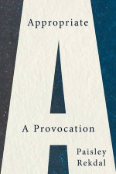
Before West, you published an epistolary essay collection, Appropriate: A Provocation, a deft exploration of how and why one appropriates and the power dynamics that arise out of wielding a voice that isn’t one’s own. It’s a book I wish I had read during my own creative writing classes, as it examines the subject with nuance and provides guidance in a non-judgemental yet direct voice that reminded me a little of Rilke’s Letters to a Young Poet. To close out our conversation, can you talk about how this book came to be, and as someone who writes a lot of persona poems, whether writing it caused you to question or reevaluate any poems you’d previously written?
Oh, for sure, yeah. The book came from a Facebook post, of all things. It was right after the Anders Carlson-Wee poem stoked a lot of conversation online.
I don't know about that one.
Oh, wow, that’s literary history now.
Yeah, Twitter and Facebook move fast.
I think that particular event exploded across all the social media sites. I even talk about it in Appropriate. I think the poem is called “How-To.” People were furious at this poem. And I wrote a post where I said, “Let's look at this poem,” and I broke the poem down through close reading, and I was like, “This is what the poem is arguing, this is how the voice sounds and what it suggests, and I think this is why people find it appropriative.” It was a pretty critical look at the poem. But then at the end of my post, I said, we can have problems with the poem, for sure, but when we ask someone to apologize, and they do apologize—because he did—and then we still go after them—as people online continued to do—then maybe we should be clearer about what we mean by apology. If we've gotten the apology we asked for, then we should accept it.
That sounds fair enough.
And an editor from Norton saw the post and reached out and she was like, “It was a really good reading of the poem, and it was a really interesting thing that you said at the end. Would you like to write a book about cultural appropriation and literature?” My first impulse was, “No way.” Because it was at that time on social media where the temperature was high. More so than now, I feel like we've kind of eased up.
Yeah, I still don't know if I could think of a more third-rail literary subject, something that’s so tough to talk about objectively.
Yeah, it's really hard to talk about it, and it is a third-rail subject, but maybe a little bit less now. Maybe because persona poems came back into vogue, people are like, “Well, you know, maybe there’s a value to appropriation.”
Yeah, yeah.
Anyway, I said, “This is a guaranteed blacklisting.” Then I thought about it, and I had to admit that in every single class that I teach, I end up having a conversation about appropriation. I still have students that are afraid of it, and now they’re afraid of writing about their own lives, because they worry that is a form of appropriation. So I realized that it would be dishonest of me to teach this issue every semester and then refuse to write the book simply because I'm afraid of getting dragged through the muck of X.
Sure.
So I wrote it. But it was freeing to write because I knew writing this book, in five years, would be out of date. I mean, it's a guarantee, because, as I say in the book, our ideas about identity aren't fixed. So long as our ideas about identity change, our ideas about why one appropriation is okay and one appropriation isn't are going to change, too. The reality is, we're all appropriating all the time; no one gets away from it. So why do we accept some appropriations and not others? That's the real question. The answers to that question may change, but those answers are available to us if we’re critically aware. We can start to create an ethic for ourselves, and I believe each one of us should do just that. We each have to come up with a definition for what makes an ethical cultural approximation, if it’s not culturally appropriative. I can't do this for you. But I can show you how to think through the questions to achieve that.
Are you sure you can’t just be on call, like whenever someone's writing a poem, and they run into something potentially problematic, they could have a chat with you?
Ha! Never. They can read the book. It’s like a series of guardrails for how you can start to think about how you think, and why you think this.
But it did change my own approach to my writing. It made me go back and say, yeah, probably Intimate: An American Family Photo Album, I'm very glad I wrote that book, but I'm less glad that I published it. I don't think it was necessary to publish. I think it taught me a lot about genre limitations. I think it taught me a lot about photographic history and certainly the history of American Indians and the West. But I don't think I needed to publish it. That's a very different thing. I also think it made me write West the way I wrote it because, at the end of Appropriate, I felt like I had spent most of the book talking about the pitfalls of appropriation and the reasons why it usually goes off the rails. But I didn't talk enough about the problems that can occur when we don't even try literary appropriation.
It seems like you made up for that with the BYU Manifesto. I liked how you looked at the other side, what we might get from inauthenticity.
Yeah, yeah, I was like, here's what you lose when you don't try. The reality is, a project like West fundamentally relies upon appropriation. When you only rely upon completely accurate or existing historical documents about people to write poems, what you will find is that there are many people and perspectives that aren’t in the official historical record. You run immediately into absence. And if you have nothing but absence in the record, filling that void is the role that creative appropriation plays, when done well.
Yeah. It can combat erasure, right? It allows the voice to echo, even if we don't have the voice itself.
Exactly, yeah, you have the possibility of expanding a collective memory, even if it’s done via imaginative literature. That is really important, and to a certain extent, reading oral histories taught me that. Because, for a long while, historians looked askance at oral histories, because most of the people who were giving these were not “literate,” or “educated” in the ways that historians would prefer, and so they wouldn’t give them the same critical weight as written documents.
And let's be frank, our memories are not reliable all the time. But oral histories are where we make family memories. They're where we make collective identities. They make other kinds of collective action possible. If they rely sometimes on fabrication, or storytelling techniques, does this fundamentally discount them? This brings us back to the question of, “Where is misinterpretation productive?”
If we allow for some level of fabrication to “truthfully” encapsulate political self-awareness, that allows for each of us to feel more agency over and more responsibility to the past and the future. I think that's good. And appropriation may be one of the tools for that change coming into the world.
Interview Posted: October 27, 2026
MORE FROM DIVEDAPPER. (Drag left)